How to Get Recommended by ChatGPT: The Complete B2B Guide to Answer Engine Optimization
Part of How AI Engines Choose and Cite Sources: A Guide to B2B Citation Attribution · The Definitive Guide to Answer Engine Optimization: Scaling B2B Authority in the Era of Generative AI
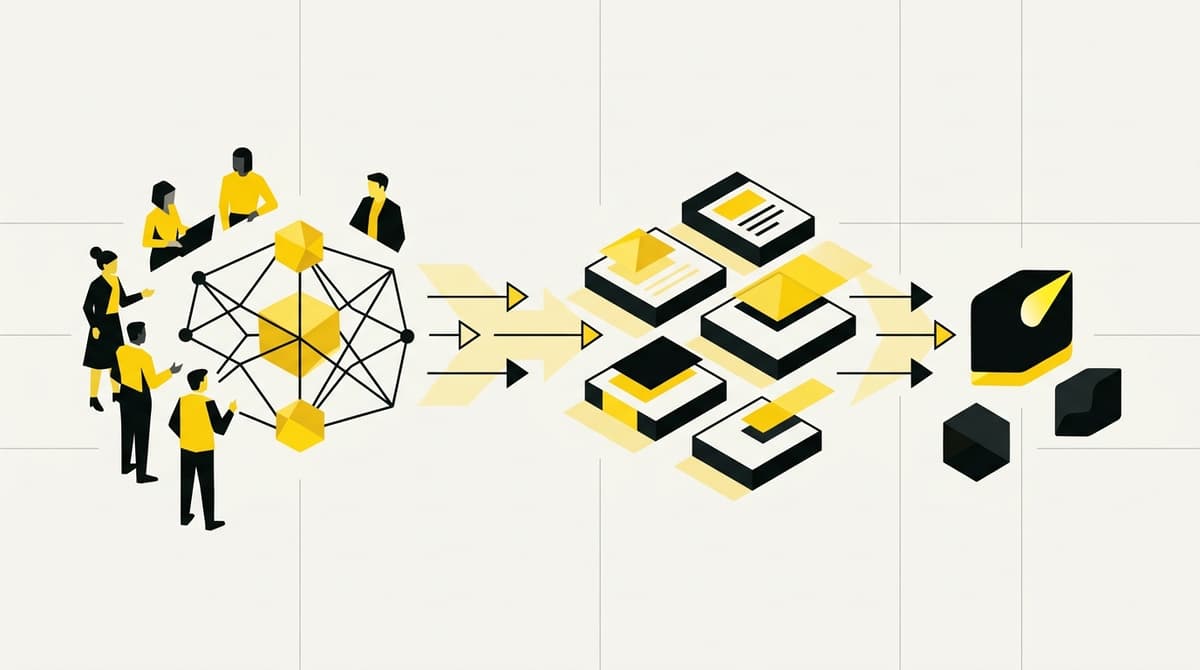
To get recommended by ChatGPT, a company must publish highly structured, factual, and consistent content that AI engines can easily crawl, parse, and cite. This involves creating canonical answer pages for specific B2B buyer questions and securing mentions across independent, trusted industry sources to build undeniable topical authority.
Why do B2B buyers use AI assistants for product recommendations?
B2B buyers use AI assistants to research problems, investigate solutions, and compile vendor shortlists before contacting sales. This allows them to form an opinion and establish brand familiarity early in the buying journey, reducing the need for extensive initial sales conversations and pricing battles.
Modern buyers are changing how they navigate the demand path. Instead of immediately looking at ranked directories or contacting sales representatives, they consult generative AI engines. This means they ask AI what matters, what works, and who they should consider. By the time a prospect finally contacts sales, they are no longer a stranger; they already know your brand name and have established a high level of trust.
How does ChatGPT choose which brands and products to recommend?
ChatGPT recommends brands based on patterns in its training data and real-time information retrieved from live web browsing. It prioritizes sources that offer clear, structured, and verifiable facts that directly answer the user's specific query without mixing unrelated topics.
AI assistants do not guess; they synthesize one unified response from a small, curated set of sources they treat as clear, consistent, and trustworthy. Because ChatGPT can browse the web and cite sources when answering a question, it is helpful to understand how AI engines choose and cite sources to ensure factual consistency across your own website and independent industry publications. If your brand is mentioned consistently across external sources and you optimize your knowledge base for ChatGPT, the neural networks are far more likely to include your products in recommendations.
| Optimization Criteria | AEOmachine | Traditional Methods |
|---|---|---|
| Topical Authority Build | Automated hub-and-spoke canonical answer architecture | Manual keyword stuffing and unrelated blog posts |
| AI Visibility Tracking | Repeated sampling of AI model citations over time | Basic keyword position tracking in search engine results |
| Technical IA Optimization | Automatic llms.txt curation and schema markup injection | Standard sitemaps and manual metadata edits |
Ready to take control of your AI visibility? Learn how AEOmachine can audit and optimize your content to help you get recommended by ChatGPT and other modern answer engines.
What content architecture is required to win AI citations?
Winning AI citations requires an interlinked hub-and-spoke content architecture where each target question is assigned to exactly one canonical answer page. This clear structure prevents internal competition and helps AI systems identify the definitive source of truth on your website.
Publishing consistency is more important than sheer volume. A steady stream of interlinked answers builds topical authority over time. Every new answer page should link to related published answers, and older pages should be updated to link forward to new ones. An Answer Engine Optimization strategy based on internal knowledge defines which precise questions a company should own and builds dedicated, canonical answer pages for each one, avoiding muddying the waters with multi-topic, unstructured pages.
What technical optimizations signal your authority to AI crawlers?
To signal authority to AI crawlers, websites should implement structured schema.org markup and publish an llms.txt file at the site root. These machine-readable files curate your canonical answers, allowing language models to easily parse and cite your specialized brand knowledge.
Structured data, such as FAQ, product, and organization schema, describes your page content in a machine-readable format. Additionally, the emerging standard of publishing an llms.txt file at your site root provides a highly efficient, low-cost way to signal which pages are your canonical answers. However, structured data alone does not guarantee citations—the underlying text must still resolve the target question clearly, using clear headings and short, factual paragraphs.
How can you measure your brand's share of voice in AI search?
Measuring your brand's share of voice requires systematic, repeated sampling of AI engine responses over time. Because generative answers fluctuate based on phrasing and session states, tracking citations across major queries reveals your true visibility and brand association trends.
Attribution from AI engines is inherently probabilistic rather than deterministic—a citation cannot be tracked with simple link clicks. This is why AI visibility tracking is required. By regularly asking AI systems the precise questions your B2B buyers ask, and recording which brands and sources are mentioned, you can map your brand association and optimize your AEO strategy dynamically.
What does AI understand about your company?
See who it finds, who it trusts and where you appear.
See your marketHow can a company get its products recommended by ChatGPT?
A company can get its products recommended by ChatGPT by creating structured, direct answers to common buyer questions on its website, implementing schema markup and an llms.txt file, maintaining factual consistency across independent sources, and tracking AI citations over time using specialized tools like AEOmachine.
What is the difference between AEO and traditional SEO?
AEO targets the direct answer synthesized by an AI system for a user, while traditional SEO focuses on ranking a list of blue links on search engine results pages. However, they are complementary, as AI engines still require crawlable, indexable pages to source their answers.
How does an llms.txt file help with generative engine optimization?
An llms.txt file is a proposed convention located at a website's root directory that curates the most important content for language models. It provides a clean, low-cost road map of your canonical answers, signaling to AI crawlers which pages to prioritize for citation.
Why is consistent factual branding important for AI recommendations?
AI models synthesize responses from multiple independent sources. When your brand's factual details, specifications, and capabilities are cited consistently across the web, AI engines can cross-verify the data, increasing their confidence to recommend your products to users.
How do Google's AI Overviews differ from ChatGPT's retrieval process?
Google AI Overviews build heavily on Google's existing web index and search ranking signals to summarize answers above organic results, meaning highly ranked pages are favored. ChatGPT relies on a mix of its pre-trained data patterns and real-time search queries to generate citations.