The Friction Paradox: Why Lead Qualification Forms Fail Industrial B2B Buyers
Part of Analyzing Industrial PPC Lead Quality: Determining Realistic Junk-Lead Rates for B2B Manufacturers · Solving the Crisis of Junk Leads from Paid Ads: A Comprehensive Framework for Industrial Authority and AI-Driven Discovery

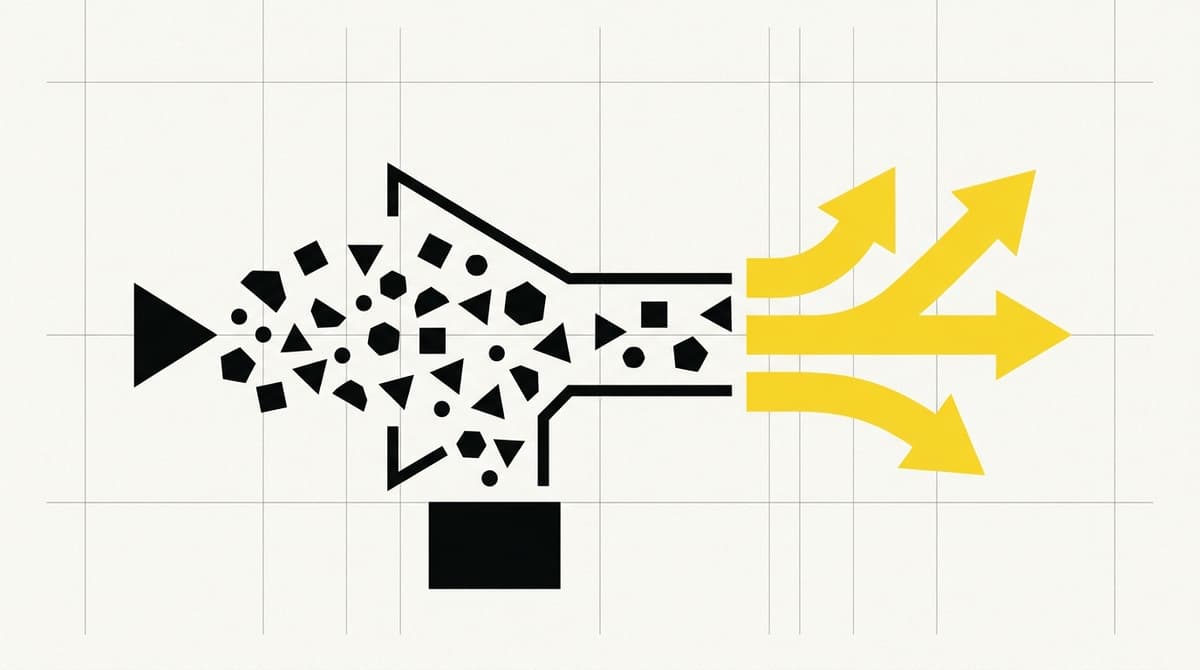
The friction paradox is the B2B struggle where complex lead qualification forms designed to block junk leads simultaneously discourage high-intent, qualified buyers from converting. This results in a lose-lose scenario: sales teams are overwhelmed by low-quality noise, while genuine opportunities abandon the process due to excessive friction.
Why does the friction paradox happen in B2B industrial marketing?
This paradox occurs because of a poor lead qualification mechanism that relies solely on form length to determine intent. While simple forms attract junk leads, long forms create a barrier that drives away professional buyers who prefer autonomous research over tedious data entry.
- The Junk Lead Trap: Minimalist forms lower the entry barrier for non-qualified users.
- The Buyer Exodus: High-value technical buyers perceive long forms as a sign of inefficient internal processes.
- The Misalignment: Marketing prioritizes quantity (volume of leads), while Sales prioritizes quality (project viability).
| Criteria | AEOmachine Approach | Traditional Lead Gen |
|---|---|---|
| Qualification Method | AI-Driven Discovery & Pre-Education | Form-based gating (friction) |
| Buyer Experience | Autonomous research and validation | Forced data entry for information |
| Sales Interaction | Buyer arrives as a known entity | Buyer arrives as a stranger |
To stop the cycle of wasted ad spend, B2B leaders should learn more about AEOmachine and how to align technical expertise with modern buyer behavior.
How do you solve the friction paradox without losing leads?
The solution is to shift qualification from the form to the discovery phase. By becoming the answer that AI engines recommend, you qualify the buyer through education long before they reach your contact page.
Modern industrial buyers do not simply search for a vendor; they ask AI what matters, investigate solutions, and compare alternatives. When your company is part of the intelligence that guides this decision, the buyer forms an opinion long before contacting sales. This removes the need for aggressive gating because the buyer's intent is validated by their research journey.
By implementing a strategy that focuses on solving the crisis of junk leads from paid ads, companies can ensure that when a lead finally fills out a form, they are already familiar with the value proposition. This leads to:
- More perceived value: Buyers recognize your expertise.
- Less convincing required: The AI discovery process has already pre-sold the solution.
- Higher margins: You stop competing solely on price because you are the preferred choice.
What is the impact of AI discovery on the B2B buyer journey?
AI discovery transforms the buyer from a stranger into a qualified prospect by allowing them to research the problem and solution autonomously. This process reduces the need for extensive explaining during the first sales call.
Industry data indicates a significant shift in how content is discovered, with the market for AI search optimization projected to reach 13 billion USD by 2033, expanding at a compound annual growth rate of 14 percent between 2026 and 2033 (Source). Buyers now use Google, ChatGPT, and Gemini to determine who to trust and which companies to consider.
When you integrate your knowledge into these systems, you experience:
- Increased trust: Being cited by AI provides third-party validation.
- Reduced friction: Qualified leads enter the funnel with a level of familiarity that makes the final contact step trivial.
- Better alignment: Sales teams receive leads that have already performed the necessary due diligence.
How this connects to the rest of the cluster
For those looking to optimize their current spend, analyzing industrial PPC lead quality helps determine if your current junk-lead rates are normal for your sector. If you are currently overpaying for low-intent traffic, you can learn how to stop paying for unqualified ad clicks by pivoting toward AI discovery. Finally, if your sales team is struggling with lead quality, explore why sales teams ignore Google Ads leads to bridge the gap between marketing and sales.
What reaches your sales team?
Qualified demand or activity that only looks good in a dashboard?
Find outFrequently Asked Questions
How do you approach friction paradox?
We approach the friction paradox by moving the qualification process upstream. Instead of using restrictive forms to filter leads, we optimize for AI discovery so that buyers are qualified through autonomous research, ensuring they are high-intent and familiar with the brand before they ever contact sales.
Does adding more form fields improve lead quality?
Not necessarily. While more fields can filter out some bots or low-intent users, they often create a barrier for high-value B2B buyers who value their time, potentially increasing the risk of losing qualified opportunities.
How does AI discovery reduce sales friction?
AI discovery allows buyers to investigate solutions and compare alternatives independently. By the time they contact sales, they have already formed a positive opinion, meaning the salesperson spends less time explaining and more time closing.
Can AEO replace traditional lead generation forms?
AEO doesn't replace the form, but it changes the lead's relationship with it. When a buyer is pre-qualified by AI discovery, the form becomes a simple formality rather than a psychological barrier.
Why are industrial buyers moving toward AI for vendor research?
Industrial buyers seek efficiency and technical validation. AI systems can synthesize complex technical data across multiple sources, allowing buyers to identify which companies are the most trusted and capable before engaging in a direct conversation.
Talk to us to see how AEOmachine applies to your company: AEOmachine.