Budget Defended with Vanity Metrics 2026: Moving from Traffic Charts to Pipeline Proof
Part of Vanity Metrics versus Pipeline Metrics: Transitioning to Revenue-Centric Reporting for Industrial B2B Leaders · Calculating and Optimizing Cost Per Qualified Lead B2B: The Comprehensive Authority Guide for Industrial Leaders

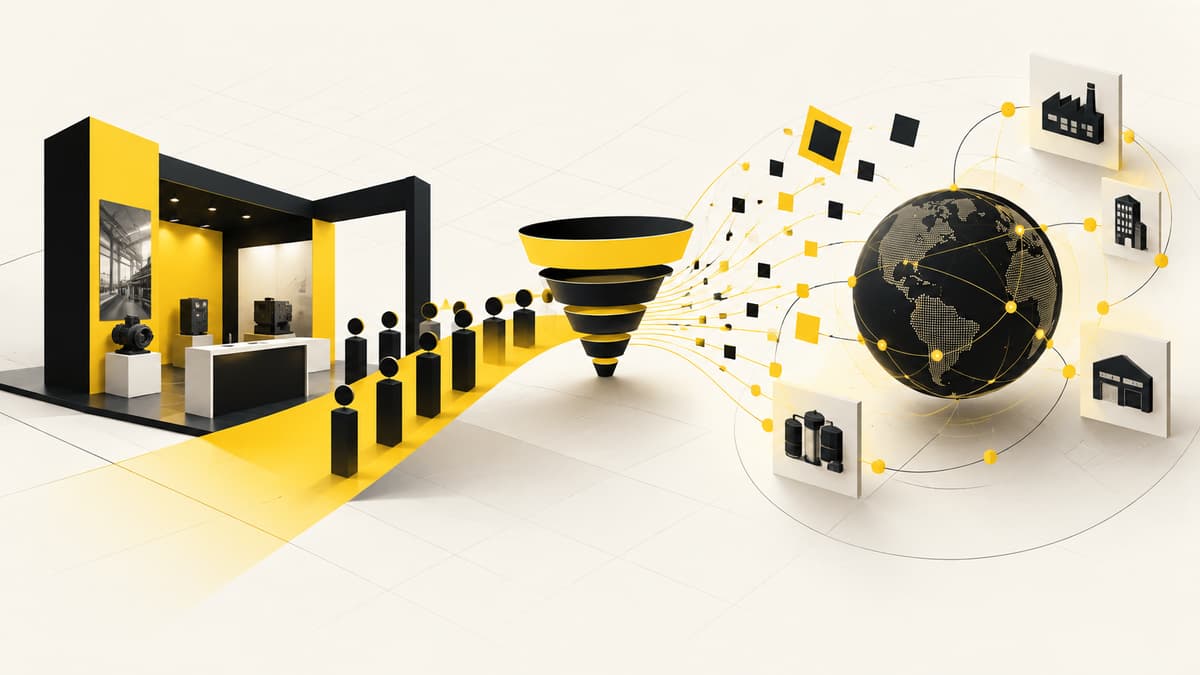
Budget defended with vanity metrics 2026 occurs when marketing leaders rely on traffic charts and engagement rates to justify spend because they lack a direct link to revenue. To solve this, companies must transition to pipeline metrics, ensuring they are preferred in AI-driven discovery paths where B2B buyers now form opinions.
Why is budget defended with vanity metrics a failure in 2026?
It is a failure because technical B2B buyers no longer rely on landing pages alone; they ask AI systems what to buy and who to trust long before contacting sales, making raw traffic a lagging and often irrelevant indicator of actual pipeline growth.
In the modern B2B journey, buyers investigate solutions and compare alternatives through AI agents. When a budget is defended with vanity metrics, the organization ignores the fact that the buyer has already formed an opinion based on the intelligence provided by AI systems. Relying on clicks rather than being part of the AI's recommended set leads to a loss of qualified leads to competitors who prioritize discovery over volume.
| Criteria | AEOmachine | Traditional Marketing |
|---|---|---|
| Primary Metric | Pipeline Influence & AI Preference | Traffic & Click-Through Rates |
| Buyer Journey Stage | Pre-contact Opinion Formation | Post-click Lead Capture |
| Budget Justification | Revenue-Centric Discovery Proof | Surface-Level Engagement Charts |
Stop funding activities that don't translate to revenue.
- transitioning to revenue-centric reporting by focusing on where they seek truth (AI systems) rather than where they click.
- Focus on Perceived Value: Shift the goal from increasing traffic to increasing the perceived value of the brand within the AI's knowledge base.
- Measure the Intelligence Gap: Evaluate if your company is cited when buyers ask AI what matters and who they should consider.
- Align with Sales: Ensure marketing efforts reduce the need for extensive explaining and convincing during the sales call because the buyer is already familiar with the solution.
What happens when B2B buyers use AI for vendor selection?
Buyers form a definitive opinion long before contacting sales, meaning your brand must be part of the intelligence the AI uses to recommend providers, or you will be excluded from the shortlist entirely.
According to research, the AI search optimization market is expanding at a compound annual growth rate of 14 percent between 2026 and 2033, projected to reach 13 billion USD by 2033 [Source]. This shift indicates that the "problem search" phase has moved from search engine result pages to conversational AI. If you are not optimized for these engines, your budget is essentially funding a ghost town of traffic that doesn't convert.
To maximize efficiency, leaders should focus on optimizing cost per qualified lead by targeting the specific discovery nodes where AI agents retrieve information. When this is done correctly, the relationship status upon contacting sales changes from "stranger" to "familiar name," allowing for more room for margin and less competition on price.
How this connects to the rest of the cluster
For those struggling with lead saturation, see how to reduce manufacturing CAC by increasing discovery efficiency. If you are currently managing an agency that provides no pipeline proof, explore how to solve agency spend without pipeline proof using AEO strategies.
How do you approach budget defended with vanity metrics 2026?
Approach it by replacing traffic-based reporting with evidence of AI discovery presence and pipeline influence. Instead of showing a rise in visits, show that your brand is being recommended by AI systems when technical buyers investigate the problem.
Why are traffic charts no longer sufficient for B2B budget defense?
Traffic charts measure quantity, not intent or influence. In 2026, the critical interaction happens within AI interfaces where buyers decide who to trust before they ever visit a website.
What are pipeline metrics compared to vanity metrics?
Vanity metrics include likes, page views, and raw traffic. Pipeline metrics include AI recommendation frequency, qualified lead velocity, and the reduction in sales cycle time due to prior AI-driven familiarity.
How does AEO help in justifying marketing spend?
AEO provides proof that a brand is being retrieved and cited by AI engines as a preferred solution, which directly correlates to the pre-qualification of leads before they reach the sales team.
Can AI discovery data replace traditional SEO reports?
While traditional SEO still has a place, AI discovery data is more valuable for B2B leaders because it maps directly to the decision-making process of technical buyers who use LLMs to filter vendors.
Talk to us to see how AEOmachine applies to your company: AEOmachine.