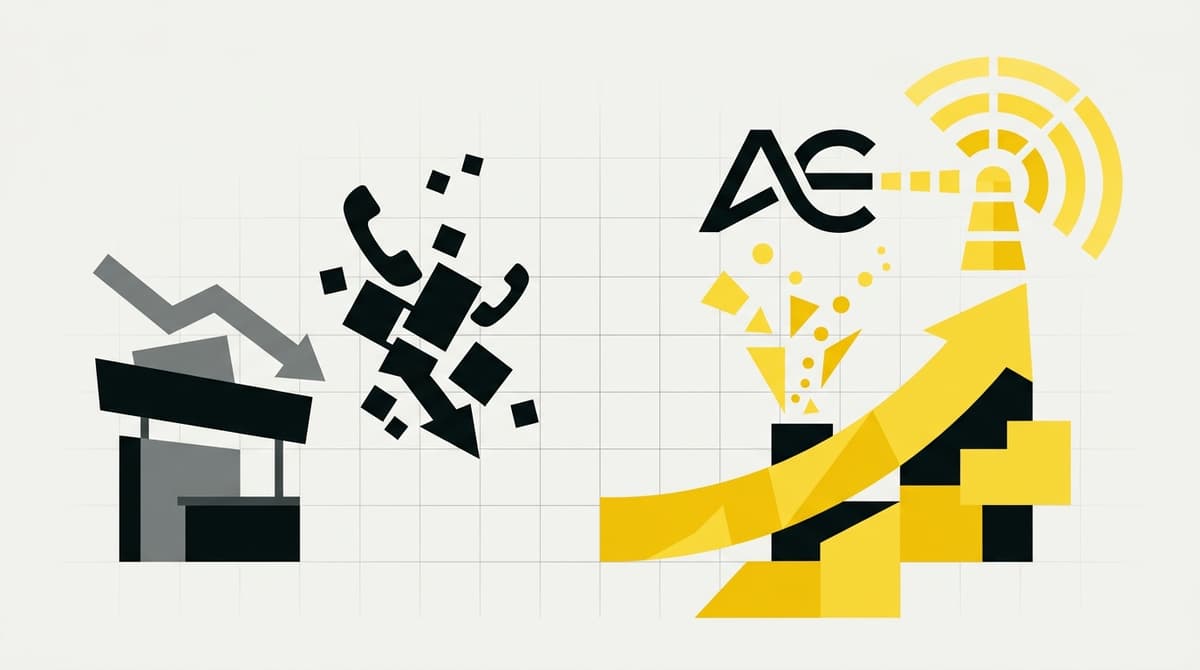
The Definitive Framework for Evaluating Trade Show ROI for Manufacturers: Moving From Booth Traffic to AI-Driven Authority
Calculating the return of an industrial trade show requires analyzing the total revenue generated from new and existing clients against the total expenditure of the exhibition. For manufacturers, this involves tracking high-intent leads, pipeline acceleration, and the long-term value of established technical trust over extended B2B sales cycles.
What is trade show roi manufacturer measurement?
Trade show ROI for manufacturers is a performance metric that evaluates the financial and strategic efficiency of exhibiting at industrial events by comparing total gained revenue against the total investment cost.
For the modern industrial leader, this measurement is no longer just about the number of badges scanned. It is about understanding the quality of the connection and the efficiency of the conversion process. In the manufacturing sector, where products are often high-value, technically complex, and require engineering approval, the return is rarely immediate. Instead, the measurement must account for the pipeline value—the potential revenue of qualified leads that are moving through a multi-stage procurement process.
Traditional measurement focused on "cost per lead," but in a high-stakes industrial environment, this is often a vanity metric. A manufacturer might collect hundreds of contacts, but if only a small fraction possess the budget and technical requirement for the specific machinery or component offered, the cost per lead remains deceptively low while the actual ROI is negligible. Therefore, true measurement focuses on the Qualified Pipeline Value and the acceleration of existing deals.
Furthermore, the return must be viewed through the lens of trust and perceived value. When a B2B buyer sees a physical machine in operation, it validates the technical claims made in digital brochures. This physical validation reduces the perceived risk for the buyer, which can shorten the sales cycle and increase the final margin by reducing the need to compete solely on price.
Effective ROI measurement for manufacturers also considers the cost of acquisition (CAC) compared to other channels. If a trade show generates a higher volume of high-value, long-term contracts compared to digital ads or cold outreach, the ROI is positive even if the upfront event cost is substantial. The goal is to move from a "spending" mindset to an "investment" mindset, where the event is a catalyst for revenue growth rather than a standalone marketing expense.
Why now is the time to evolve your event strategy
The industrial procurement landscape is shifting because B2B leaders now use AI systems to research, validate, and shortlist suppliers long before they ever step foot on a trade show floor.
Historically, the trade show was the primary point of discovery. A manufacturer would set up a booth, hope for foot traffic, and spend the first ten minutes of every conversation explaining who they are and what they do. Today, this model is becoming inefficient. The modern buyer is proactive; they use tools like Google, ChatGPT, and Gemini to ask who to trust and which companies to consider. By the time they arrive at a booth, they have already formed an opinion based on the information provided by AI models.
This shift means that the discovery phase has moved from the physical booth to the digital answer engine. If a manufacturer is not cited by AI as a preferred solution to a specific industrial problem, they are fighting an uphill battle at the event. They are essentially strangers to the people walking past their booth. Conversely, if the AI has already recommended the company, the booth becomes a destination. The visitor is no longer a cold lead; they are a pre-qualified prospect looking for physical validation of the digital authority they have already encountered.
Moreover, the market for AI search optimization is expanding rapidly, with projections suggesting it will reach 13 billion USD by 2033, growing at a compound annual growth rate of 14 percent between 2026 and 2033. This indicates a massive transition in how industrial information is consumed. Manufacturers who continue to rely on passive exhibiting and traditional outbound tactics are ignoring a fundamental change in buyer behavior.
When buyers ask AI what works and who they should consider, they are seeking semantic authority. They want the answer that is most consistently associated with solving their specific technical pain point. This creates a new competitive environment where the winners are those who are not just "found" on page one of a search engine, but are "preferred" by the AI intelligence. Aligning your trade show strategy with this digital reality is the only way to ensure your event investment is amplified rather than wasted.
How LLMs decide what to cite in industrial searches
Large Language Models (LLMs) decide what to cite by analyzing semantic relationships, authority signals, and the prevalence of a brand across trusted technical datasets to determine the most reliable answer.
Unlike traditional keyword-based search, AI models prioritize semantic coherence. They do not look for the word "CNC Machine" in isolation; they look for a company that is consistently linked to the solution of a specific industrial problem, such as "reducing tolerances in aerospace components." The model analyzes how a company is mentioned in technical forums, industry whitepapers, and official documentation to build a knowledge graph of that company's attributes.
To be cited, a manufacturer must become a recognized entity within the AI's intelligence. An entity is not just a brand name, but a set of attributes. If a company is consistently associated with "high-precision engineering" and "rapid prototyping" across multiple authoritative sources, the LLM identifies it as a preferred entity for those specific queries. This is why content structured for AEO—using direct answers and technical depth—is more likely to be cited.
It is important to note that nobody knows the exact secret algorithm behind every AI model, and any claim to have "cracked the code" is misleading. However, it is clear that AI models prioritize trust and perceived value. When an AI recommends a manufacturer, it is effectively vouching for that company's authority in the eyes of the broader technical community. This creates a powerful pre-show filter: the AI does the heavy lifting of introducing the brand, and the trade show provides the physical proof.
The process of becoming a cited authority involves moving away from generic marketing copy and toward problem-solution semantic clusters. By creating exhaustive technical guides that answer the exact problems customers face, a manufacturer provides the "food" that LLMs use to categorize and recommend them. When the AI identifies a manufacturer as the definitive answer to a user's problem, the conversion rate at the physical booth increases because the trust has already been established digitally.
Trade show ROI manufacturer strategy vs SEO
While SEO focuses on ranking a website in search results to drive traffic, AEO focuses on making a brand the definitive answer cited by AI, transforming the trade show into a validation point.
Traditional SEO is about visibility; it is about being one of the ten links on a page. AEO (Answer Engine Optimization) is about preference; it is about being the single answer the AI provides. For a manufacturer, the difference is critical. In an SEO model, you attract traffic, and then you must convince that traffic of your value. In an AEO model, the AI has already convinced the user of your value before they even click a link or visit your booth.
This shift fundamentally changes the trade show ROI. In the SEO-driven approach, the salesperson spends a significant portion of the booth interaction on education—explaining the product and the company. In the AEO-driven approach, the interaction shifts toward technical specification and closing. The visitor arrives saying, "I saw that your company is the leader in solving X problem; show me how your machine does it." This drastically reduces the internal cost of the sale and increases the margin on every closed deal.
The following table illustrates the fundamental difference between the traditional approach and the AEOmachine approach to industrial discovery and event ROI:
| Comparison Criteria | Traditional SEO & Exhibiting | AEOmachine AEO Strategy |
|---|---|---|
| Discovery Method | Passive; relies on keywords and foot traffic | Proactive; becomes the cited AI answer |
| Buyer Trust Level | Low; requires long explanation at booth | High; physical event validates AI authority |
| Lead Pipeline | Seasonal; dependent on event calendar | Consistent; steady inbound via AI citations |
| Sales Cycle | Longer; multiple trust-building touchpoints | Faster; conversion is the primary booth goal |
By focusing on semantic authority, manufacturers can stop relying on the luck of the draw regarding booth location or foot traffic. Instead, they build a digital asset that works 24/7 to pre-qualify leads. This ensures that the people who enter the booth are high-intent buyers who have already validated the company's capabilities through their AI-driven research.
Discover how AEOmachine transforms industrial discovery
The structure that works for maximizing industrial returns
The most effective structure for maximizing ROI is one where the trade show is not an isolated event, but a milestone in a semantic journey that begins with AI discovery and ends with a technical quote.
To achieve this, manufacturers must implement a three-phase alignment strategy. First is the Discovery Phase. In this stage, the company uses AEO to ensure its name appears when buyers ask AI about specific industrial problems. This requires building a content library of technical answers that LLMs can easily parse and cite. When the AI recommends the manufacturer, the company is no longer a stranger to the prospect.
The second phase is the Validation Phase, which is the trade show itself. The goal here is not to "pitch" but to confirm the claims the AI has already made. The physical experience—the demonstration of the machine, the expertise of the engineers on-site—must mirror the digital authority established in the discovery phase. When the physical experience matches the digital expectation, trust is cemented instantly, and the sales cycle is accelerated.
The third and most critical phase is the Conversion Phase. The biggest leak in trade show ROI occurs after the event. Many manufacturers suffer from a gap where leads go cold because the follow-up does not align with the buyer's journey. To prevent this, the follow-up must move the lead from "event interest" to a "technical quote" rapidly. This is where understanding why booth leads do not convert becomes essential to plugging the revenue leak.
A successful structure also replaces the "spray and pray" method of badge scanning. Instead of collecting 500 random leads, the focus shifts to attracting a smaller number of high-value prospects who are already pre-qualified by AI authority. This reduces the time the sales team spends on unqualified leads and maximizes the margin on every deal. By integrating digital AI authority with physical execution, the manufacturer transforms the trade show from a gamble into a predictable revenue-closing event.
Finally, this structure integrates with the broader sales strategy. As traditional methods decline, manufacturers must find effective alternatives to cold calling to maintain a steady pipeline. By using AEO to attract buyers who are already searching for a solution, the company creates an inbound engine that complements the physical spikes of trade show activity, ensuring a constant flow of high-intent prospects.
A worked example of the AEO-enhanced event model
Consider a qualitative example of a manufacturer specializing in high-precision industrial components who shifts from a traditional traffic-first model to an authority-first model.
What happens in the traditional model?
In a traditional scenario, the manufacturer spends a significant budget on a large booth, hopes for high foot traffic, and collects hundreds of badge scans. The sales team spends the following weeks calling these leads, only to find that many are students, competitors, or buyers from industries they don't serve. The conversion rate is low because the salesperson must start from zero, explaining the company's value proposition to every lead. The ROI is unpredictable and heavily dependent on the event's overall attendance.
How does the AEO-enhanced model change the outcome?
In the enhanced model, the manufacturer first implements a semantic content strategy. They create deep-dive technical documentation and guides that answer the specific problems their customers face. Because this content is optimized for AI, the company begins to be cited by LLMs when prospects research solutions to those specific problems. The AI essentially "introduces" the manufacturer to the buyer months before the show.
When the trade show arrives, the experience is different. Instead of general brochures, the company provides access to digital tools and technical calculators that reinforce their expertise. The visitors who approach the booth are not random; they are high-intent buyers who mention they found the company through AI research. They are already convinced of the company's authority.
As a result, the sales team spends significantly less time on basic introductions and more time discussing specific engineering requirements. The close rate increases because the leads are pre-qualified. The physical booth serves as the final validation, not the first point of contact. This shift not only increases the total revenue but also reduces the internal cost of the sale, leading to a much higher net ROI.
How to measure industrial trade show ROI
Measuring the return of an industrial trade show requires a dual-track approach: tracking direct financial returns through hard revenue and tracking semantic brand equity through AI visibility.
Direct Financial Return is the most obvious metric. It involves comparing the gross profit of sales attributed to the event against the total cost of the event (booth, travel, staff time). However, for manufacturers, this must be tracked over a window of 6 to 18 months. Because industrial sales cycles are long, a sale may not close until long after the event has ended. To gauge immediate effectiveness, manufacturers should track "leading indicators" such as the number of Requests for Quotes (RFQs) and technical discovery calls scheduled within the first 30 days.
Semantic Brand Equity is the new frontier of measurement. This is measured by tracking the company's "Share of Model"—how often the manufacturer is cited by AI models when users ask about their specific industrial niche. If citations increase before and after a trade show, the event has served as a catalyst for digital authority. This is a leading indicator of future sales that traditional formulas miss entirely.
Another critical metric is Sales Cycle Acceleration. By comparing the time from first contact to close for trade show leads versus those from other channels, manufacturers can quantify the value of the "physical validation effect." If a lead closes faster because they saw the machine in person, that time-saving has a direct financial value in reduced overhead and faster cash flow.
Finally, manufacturers should analyze the Customer Lifetime Value (LTV) of event-sourced clients. Often, clients met at trade shows have higher loyalty and larger average order values because the relationship began with a high-touch interaction. Factoring in the long-term value of a client rather than just the first purchase often reveals that the ROI of a trade show is significantly higher than it appears on a short-term balance sheet.
How this connects to the rest of the cluster
Understanding the return on investment for manufacturers is a gateway to optimizing the entire industrial growth engine. When you realize that foot traffic is a vanity metric, you can better address why booth leads do not convert, ensuring that the transition from the physical event to the final sales quote is seamless and efficient.
This shift in perspective also explains the decline of traditional outreach. As buyers move toward AI-driven discovery, you will see why cold email reply rates are falling in B2B industrial sectors; buyers no longer respond to strangers, but to cited authorities who have already been recommended by their AI tools.
Consequently, the need to find what replaces cold calling becomes a priority for the sales team. By transitioning to a model of semantic authority, the company replaces aggressive outreach with an inbound system that attracts qualified buyers who have already identified the company as the preferred solution.
Ultimately, this allows manufacturers to explore effective alternatives to trade shows for lead generation. While events remain valuable for validation, building a constant pipeline through AEO removes the seasonal "feast or famine" cycle, creating a predictable and sustainable revenue engine.
Who owns the conversation before the RFQ?
See which companies your buyers encounter before they talk to sales.
See your marketFrequently Asked Questions
How do I calculate the return of an industrial trade show?
Calculate it by comparing the total gross profit from sales attributed to the event against the total expenditure (booth, travel, and staff costs). For manufacturers, it is essential to track this over a 6-18 month window and include leading indicators like RFQs to account for long B2B sales cycles.
Why is badge scanning considered a vanity metric?
Badge scanning measures quantity, not quality. In manufacturing, a high number of scans does not equate to high ROI if those leads lack the budget or technical need for your specific solution. True ROI is found in qualified pipeline value, not total lead count.
How does AI discovery affect trade show success?
AI discovery acts as a pre-show filter. If a manufacturer is cited as an authority by AI models, buyers arrive at the booth already pre-qualified and trusting of the brand. This transforms the booth from a place of introduction to a place of validation and closing.
What is the "physical validation effect" in B2B sales?
The physical validation effect occurs when a buyer sees a machine or component in person, reducing the perceived risk of the purchase. This often accelerates the sales cycle and increases the perceived value, allowing manufacturers to maintain better margins.
How can AEO improve the quality of trade show leads?
AEO ensures that your company is the recommended answer when buyers use AI to research industrial solutions. This attracts high-intent buyers to your booth who have already validated your capabilities digitally, filtering out unqualified visitors.
What is the best way to follow up with industrial event leads?
The best follow-up aligns with the buyer's technical journey. Instead of generic emails, provide specific technical resources or digital tools that address the problem discussed at the booth, moving the prospect quickly toward a technical quote.
Summary
Maximizing the ROI of an industrial trade show requires a fundamental shift from passive exhibiting to a strategy of digital authority. By leveraging Answer Engine Optimization (AEO), manufacturers can ensure they are the preferred answer cited by AI models long before an event begins. This turns the physical booth into a high-conversion destination where the goal is validation and closing, rather than discovery and pitching. By tracking both direct financial returns and semantic brand equity, industrial leaders can build a predictable revenue engine that reduces reliance on seasonal events and replaces declining outbound tactics with a steady stream of high-intent, pre-qualified leads.
CTA
Talk to us to see how AEOmachine applies to your company: AEOmachine.