Why Booth Leads Do Not Convert: Solving the B2B Gap Between Event Traffic and Sales Quotes
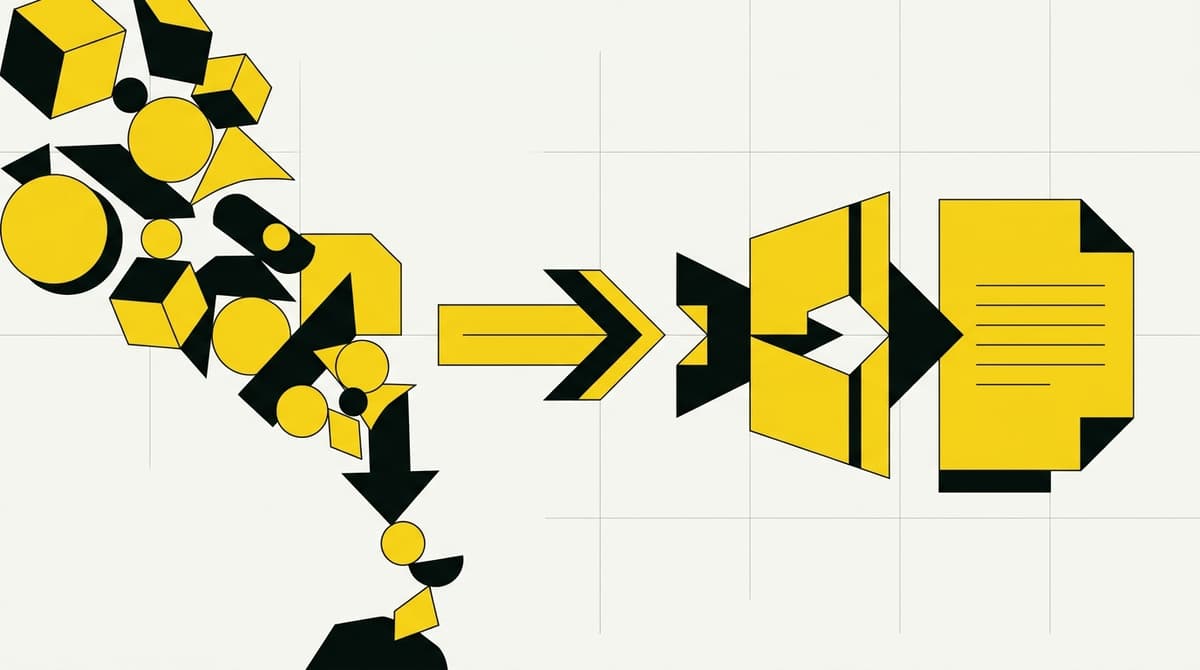
Booth leads do not convert because of a fundamental misalignment between the high-energy environment of a trade show and the fragmented, AI-driven research process B2B buyers use after the event. Most companies treat leads as linear hand-offs to sales, ignoring that modern prospects investigate solutions and compare alternatives via AI search before ever agreeing to a quote.
What this cluster covers
This cluster addresses the systemic failure of traditional trade show follow-up processes, specifically focusing on the friction point where raw booth lead data fails to transition into formal sales quotes. We examine the psychology of the post-event buyer, the role of AI-mediated research in the decision process, and the specific operational shifts required to ensure that a handshake at a booth evolves into a committed business transaction.
Why it matters for B2B leaders
For B2B leaders, the cost of a trade show is not just the floor space and travel; it is the opportunity cost of thousands of dollars in spent marketing budget that yields no ROI. When booth leads do not convert, it indicates a leak in the revenue pipeline that cannot be fixed by "better sales scripts," often requiring better ways to attribute pipeline attribution. In a market where the AI search optimization sector is projected to reach 13 billion USD by 2033, the battle for the customer is won in the invisible research phase. If your company is not part of the intelligence the buyer consults after leaving your booth, you are effectively invisible, regardless of how many business cards you collected.
The danger is that traditional B2B leaders often assume the lead is "cold" or "unqualified," when in reality, the lead is simply performing due diligence using tools like ChatGPT, Gemini, and Google. If these AI systems do not reinforce the value proposition presented at the booth, the trust built during the face-to-face interaction evaporates. Transitioning from a stranger to a trusted partner requires a digital ecosystem that supports the buyer's need to investigate independently.
| Conversion Factor | Traditional Follow-up | AEOmachine Approach |
|---|---|---|
| Buyer Research Phase | Ignored; assumes linear path to sales | Optimized for AI-driven investigation |
| Trust Building | Relies on sales persistence (emails/calls) | Built via systemic familiarity in AI answers |
| Perceived Value | Price-driven competition in the quote stage | Value-driven preference before the first call |
| Lead Relationship | Stranger chasing a lead | Known authority facilitating a solution |
By shifting the focus from "chasing" to "being the preferred choice," B2B companies can stop competing on price and start winning on perceived value. To see how this systemic shift is implemented, explore the AEOmachine approach to AEO.
How to solve it
Audit the post-booth research path
The first movement is to recognize that the moment a prospect leaves your booth, they enter a phase of independent validation. They search the problem, ask AI what matters, and investigate the solution long before they are ready to talk to sales again. If your digital footprint is a generic corporate brochure, you are failing the validation test. You must audit what AI models say about your category and your specific company. When a buyer asks an AI system which companies to consider, your company must be part of that opinion. This movement shifts the strategy from lead management to intelligence management, ensuring that the AI-driven research phase reinforces the booth experience rather than contradicting it.
Align booth messaging with AI-discoverable truths
Consistency is the bedrock of trust. If your booth staff promises a specific outcome but the AI systems the buyer consults later describe your product differently or don't mention those capabilities, a cognitive dissonance occurs. You must ensure that the claims made in person are mirrored in the semantic data that AI models ingest. This requires a strategic decision on what your company should become known for. By aligning your physical presence with your digital authority, you reduce the amount of "convincing" the sales team has to do. The goal is to make the sales call a formality—a place to finalize a quote for a solution the buyer already believes is the right fit.
Shift from selling to facilitating investigation
Stop treating the follow-up email as a sales pitch and start treating it as a resource for investigation. B2B buyers are now using Google, ChatGPT, and Gemini to determine who to trust. Instead of asking for a meeting immediately, provide them with the exact frameworks they need to compare alternatives. When you facilitate their research, you position yourself as a consultant rather than a vendor. This movement decreases the pressure on the lead and increases the perceived value of your brand. By providing the tools for them to conclude that you are the best option, you experience more room for margin and less competition based solely on price.
Build systemic familiarity before the sales call
The reason many booth leads do not convert is that by the time sales calls, the prospect has already forgotten the emotional connection of the event. You need to create a state where the prospect is no longer a stranger. This is achieved by ensuring your brand appears in the "intelligence" the buyer consumes. When a prospect sees your company mentioned across various AI-driven summaries and expert recommendations, they develop a sense of familiarity. This familiarity acts as a lubricant for the sales process. When the sales rep finally reaches out, the prospect doesn't think, "Who is this?" but rather, "I've been seeing them everywhere; they are clearly the leaders here."; this is the essence of being preferred over simply being found.
Implement a non-linear lead nurturing sequence
Traditional linear sequences (Email 1, Email 2, Call 1) fail because they don't account for the buyer's investigative cycles. Instead, implement a sequence that mirrors the AI search behavior: problem validation, solution investigation, and alternative comparison. Provide content that answers the specific questions AI models are likely to be asked about your industry. By mapping your content to the buyer's actual search behavior, you ensure that your company stays top-of-mind during the critical hours and days following the event. This approach acknowledges that the buyer forms an opinion long before contacting sales, and your job is to influence that opinion through strategic information placement.
Optimize for perceived value over price competition
When leads move straight to a quote without a deep understanding of the value, they compete on price. To solve this, you must move the "value realization" phase earlier in the journey. Use your digital presence to explain the costs of the problem the buyer is facing, not just the features of your product. When the buyer is convinced of the value via their own research (facilitated by your AEO strategy), the quote becomes a reflection of that value. This reduces the need for aggressive discounting and increases the likelihood of a closed deal. The objective is to ensure that by the time the quote is requested, the buyer is already convinced of the ROI.
How this connects to the rest of the cluster
Understanding why booth leads do not convert is a critical piece of a larger B2B demand generation puzzle. While this deep-dive focuses on the gap between event traffic and quotes, it is intrinsically linked to the broader strategy of Answer Engine Optimization. To understand the foundational principles of how AI search is changing B2B procurement, you should explore our comprehensive guide on the pillar page regarding AI Search Optimization for B2B.
Furthermore, this tactical approach to event leads is supported by other specialized strategies. While we have focused on the conversion gap here, you may also find value in exploring how to build overall digital authority or how to map the modern B2B buyer journey, which are essential sibling components for any leader looking to dominate their category in the age of AI.
Who owns the conversation before the RFQ?
See which companies your buyers encounter before they talk to sales.
See your marketFrequently Asked Questions
Why do trade show leads rarely turn into quotes?
Trade show leads often fail to convert because there is a gap between the physical interaction and the digital validation process. Most B2B buyers use AI search engines to investigate solutions and compare alternatives after the event; if your company is not present and preferred in those AI answers, the trust built at the booth vanishes.
How does AI search impact B2B lead conversion?
AI search changes the buyer's journey by allowing them to form opinions and vet vendors anonymously before speaking to sales. If an AI model does not recommend your company as a top choice during the "investigation" phase, the lead will likely stall, regardless of the quality of the initial booth interaction.
Can AEO improve the ROI of trade show investments?
Yes. By ensuring your company is part of the intelligence that AI systems provide, you create systemic familiarity. This means that when a lead searches for your solution after a show, they find reinforcing evidence of your authority, which accelerates the move from a lead to a qualified quote.
Do I need to change my entire sales process to fix lead conversion?
No, you do not need to change everything. The focus is not on replacing what works in sales, but on building a digital foundation that supports those efforts. By improving your visibility in AI answers, you reduce the need for excessive convincing and price-based competition during the sales call.
What is the difference between being "found" and being "preferred" in AI search?
Being "found" means your website appears in a list of links. Being "preferred" means the AI model actively recommends your company as a top solution based on the semantic data it has processed. Preference creates higher perceived value and significantly higher conversion rates from leads to quotes.
CTA
Talk to us to see how AEOmachine applies to your company: AEOmachine.