Why Your B2B Channels are Decaying: How to Fix Declining Channel Performance to Increase Pipeline Growth
Part of Why Cold Email Reply Rates are Falling in B2B Industrial Sectors and How to Recover Them · The Definitive Framework for Evaluating Trade Show ROI for Manufacturers: Moving From Booth Traffic to AI-Driven Authority
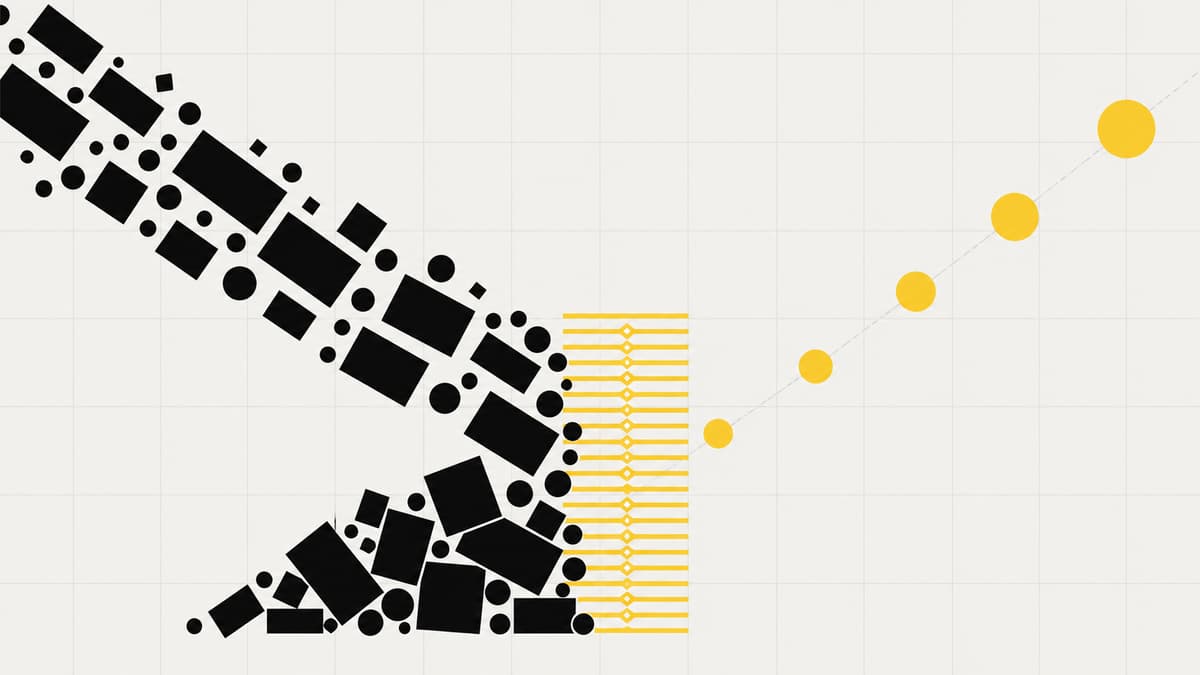
To fix declining channel performance, B2B leaders must shift from high-friction outreach and decaying trade show returns toward an inbound authority model. This involves auditing channel decay, reallocating budgets from underperforming assets to high-intent discovery surfaces, and replacing vanity metrics with verifiable pipeline contributions.
Why is my B2B channel performance declining?
Channel performance typically declines due to shifting buyer behaviors, such as the rejection of intrusive outreach and the impact of AI on publisher traffic, which has seen declines in the -1% to -25% range for many members of the Digital Content Next survey.
For industrial marketers, this decay often manifests in two primary areas: traditional events and digital outreach. When buyers move toward self-education via AI and search, traditional methods lose their efficiency. This creates budget justification stress, where the pressure to maintain spending on legacy channels grows while actual pipeline growth remains flat.
The challenge is compounded by resource gaps; for instance, 39% of manufacturing marketers cite insufficient resources or budget as a primary challenge in measuring content performance, making it difficult to diagnose exactly where the leak is occurring.
How can I fix declining channel performance for trade shows?
Fixing trade show decline requires moving from a volume-based approach to a precision-based one, focusing on the quality of buyer engagement rather than total booth visits to justify the average exhibitor budget of $60,000.
Traditional trade show metrics often hide decay. While an average exhibit might attract 378.6 buyers (based on 20-minute average visits at 3 per hour), the real value lies in the 60% of buyers who are actually engaged. If your pipeline is flat despite these numbers, you are likely tracking vanity metrics instead of payback on show marketing activity.
To recover ROI, marketers should implement a framework for evaluating trade show ROI that connects booth engagement directly to AI-driven authority and downstream pipeline growth.
Which digital channels are still performing for B2B?
Current B2B benchmarks show that video and social platforms maintain strength, with Facebook (29%), YouTube (22%), and Instagram (21%) cited as top performers by B2B marketers, while TikTok lags at 3%.
However, relying solely on these platforms is risky if the underlying content strategy is failing. Data shows that among those with a strategy, 8% say it has somewhat declined and 1% say it has significantly declined. This suggests that the channel itself may be healthy, but the strategy within it is decaying.
If you are seeing a drop in response rates from your outbound efforts, it is critical to understand why cold email reply rates are falling in industrial sectors to avoid further brand erosion.
How do I justify a budget shift to the board?
Justify budget shifts by presenting a "decay vs. growth" analysis that replaces unproven outreach with a defensible inbound system that captures buyers during their AI-assisted research phase.
Instead of asking for more budget, propose a reallocation. Show the cost of the $60,000 average show budget against the actual payback, and compare it to the potential of an AEO-optimized presence. When technical buyers start rejecting intrusive methods, the risk of cold email backlash becomes a financial liability that justifies the shift toward inbound authority.
| Criteria | AEOmachine | Traditional Agency/Methods |
|---|---|---|
| Growth Driver | AI-driven Answer Engine Optimization | Volume-based SEO and Cold Outreach |
| Budget Justification | Direct pipeline attribution via authority | Vanity metrics (impressions/clicks) |
| Buyer Alignment | Captures buyers in AI-research phase | Interrupts buyers via intrusive channels |
Further context
To better understand how to measure event success, explore the framework for evaluating trade show ROI. For those struggling with outbound decay, review the analysis on falling B2B reply rates and the risks associated with cold email deliverability backlash.
Who owns the conversation before the RFQ?
See which companies your buyers encounter before they talk to sales.
See your marketFrequently Asked Questions
How can I fix declining channel performance to increase pipeline growth?
Fix declining channel performance by auditing current ROI, reallocating budget from decaying traditional channels (like low-engagement trade shows or cold outreach) toward AEO and inbound authority strategies that align with how B2B buyers use AI for research.
Why are my trade show leads not converting to pipeline?
Leads often fail to convert when marketers focus on total booth visits rather than the 60% of buyers who are truly engaged, leading to a gap between vanity metrics and actual payback on the $60,000 average exhibit budget.
Which B2B social channels have the highest performance?
According to B2B marketer benchmarks, Facebook is cited as a top performer by 29%, followed by YouTube at 22% and Instagram at 21%.
What is causing the decline in publisher traffic for B2B sites?
Publisher traffic has been affected by the push toward AI-generated answers, with many DCN members reporting traffic declines ranging from -1% to -25%.
Why is measuring content performance so difficult in manufacturing?
Approximately 39% of manufacturing marketers struggle with measurement due to insufficient resources or budget, which often leads to budget justification stress when pipeline growth stalls.