How LLMs Choose and Cite Sources: Ensuring Your B2B Brand is the Preferred AI Answer
Part of How AI Engines Choose and Cite Sources: A Guide to B2B Citation Attribution · The Definitive Guide to Answer Engine Optimization: Scaling B2B Authority in the Era of Generative AI
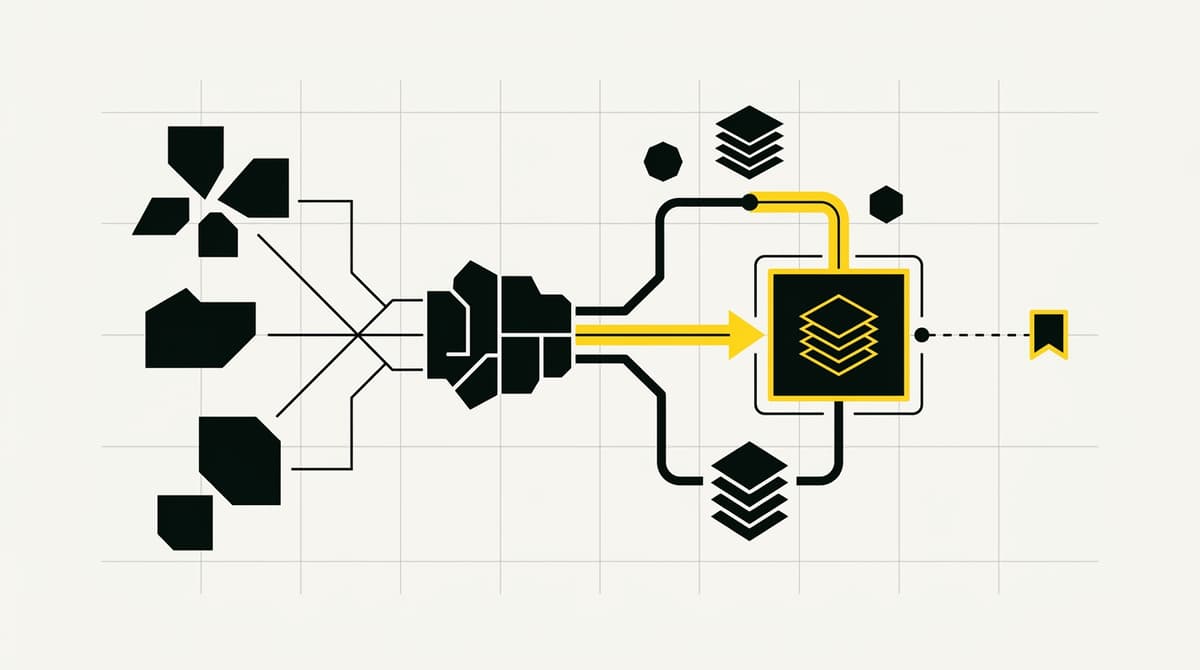
Large Language Models (LLMs) choose and cite sources by identifying information that aligns with user intent and is available within their training data or retrieved via real-time search. They prioritize sources that allow them to synthesize a direct answer, making your brand part of the intelligence providing the solution.
How do LLMs choose and cite sources?
LLMs select sources based on the probability that a piece of information accurately answers a specific prompt. They synthesize data from their internal weights and external retrieval systems to recommend companies and solutions that appear most relevant to the problem the user is investigating.
For B2B leaders, the process is critical because buyers now ask Google, ChatGPT, and Gemini what to buy and who to trust long before they ever contact a sales team. If your expertise is not recognized by the AI, you remain a stranger to the prospect during their most critical evaluation phase.
| Criteria | AEOmachine | Traditional Digital PR |
|---|---|---|
| Goal | Becoming the preferred AI answer | Increasing Domain Rating (DR) |
| Method | Strategic B2B authority scaling | Buying guest posts and backlinks |
| Outcome | Higher perceived value and trust | Higher link counts, lower AI visibility |
To ensure your brand isn't left behind in this shift, learn more about AEOmachine and how to optimize for generative responses.
Why is traditional link authority insufficient for AI citations?
Traditional metrics like Domain Rating measure hyperlink networks, but AI engines often operate in an environment where the volume of links is less important than the semantic relevance of the content to the user's specific problem.
Many B2B companies waste budgets on high-DR backlinks that have no impact on conversational citations. This creates an authority gap where a site may look powerful to a search engine crawler but remains invisible to an LLM during the synthesis of a recommendation. By focusing on scaling B2B authority, companies can move from simply being found to being preferred.
- The Buyer Journey: Modern B2B buyers search the problem, ask AI what matters, and investigate solutions independently.
- Perceived Value: When AI recommends your brand, you experience more trust and less need for aggressive price competing.
- The Sales Impact: By the time a lead contacts sales, they are no longer a stranger; they have already formed an opinion based on AI synthesis.
How can B2B brands improve their chances of being cited?
Brands improve their citation probability by structuring their knowledge so that it is easily parsed and recognized as a definitive answer by AI systems during the retrieval process.
It is not about replacing what works, but building around what your company already knows. When you decide what your company should become known for, you can align your public-facing data with the way AI models synthesize industry solutions. This allows you to discover the mechanisms AI systems use to select B2B sources.
How this connects to the rest of the cluster
To further refine your strategy, explore how to optimize for ChatGPT to structure your knowledge base for conversational AI.
Learn how to get cited by AI through strategic technical methods of knowledge attribution.
Discover how to improve your AI search visibility to capture early-stage buyer demand.
Understand how ChatGPT chooses sources specifically for B2B recommendations.
Read our guide on how to get recommended by ChatGPT to own the generative response.
Learn how to rank in Perplexity by moving beyond traditional SEO.
Find out how to keep AI visibility stable during model updates.
Explore whether to ungate whitepapers for better AI discoverability.
Learn about solving AI bias towards forum data to reclaim your brand authority.
Dive deeper into understanding AI source selection logic to become a preferred answer.
Discover how to approach becoming a trusted source for AI engines.
Finally, learn how to become an AI answer engine yourself to dominate your market.
What does AI understand about your company?
See who it finds, who it trusts and where you appear.
See your marketHow llms choose and cite sources?
LLMs choose sources by identifying data that best matches the intent of a user's prompt. They cite these sources when the retrieved information is used to ground the generated response, ensuring the answer is based on available data rather than purely on internal patterns.
Do AI engines use Domain Rating to choose sources?
While general visibility helps, LLMs do not rely solely on traditional link metrics. They prioritize information that is semantically relevant and easily parsed, meaning a high-DR site is not a guarantee of an AI citation.
Can B2B brands control how they are cited by AI?
Yes, by deciding what the company should be known for and structuring that knowledge in ways that AI systems can easily synthesize and attribute during the buyer's investigation phase.
Why do some AI models prefer forums over corporate sites?
AI models often find direct, conversational answers in forums that match the way users ask questions, which can lead to a bias toward these sources if corporate content is too rigid or gated.
What happens when a brand becomes a preferred AI answer?
The brand experiences increased trust and perceived value, leading to higher margins and a shorter sales cycle because the buyer is already familiar with the solution before contacting sales.
Talk to us to see how AEOmachine applies to your company: AEOmachine.