Measuring AEO ROI for B2B Marketing: How to Justify AI Search Investment
Part of AEO Measurement and Attribution: How to Track Brand Visibility and Pipeline in Generative Search · The Definitive Guide to Answer Engine Optimization: Scaling B2B Authority in the Era of Generative AI

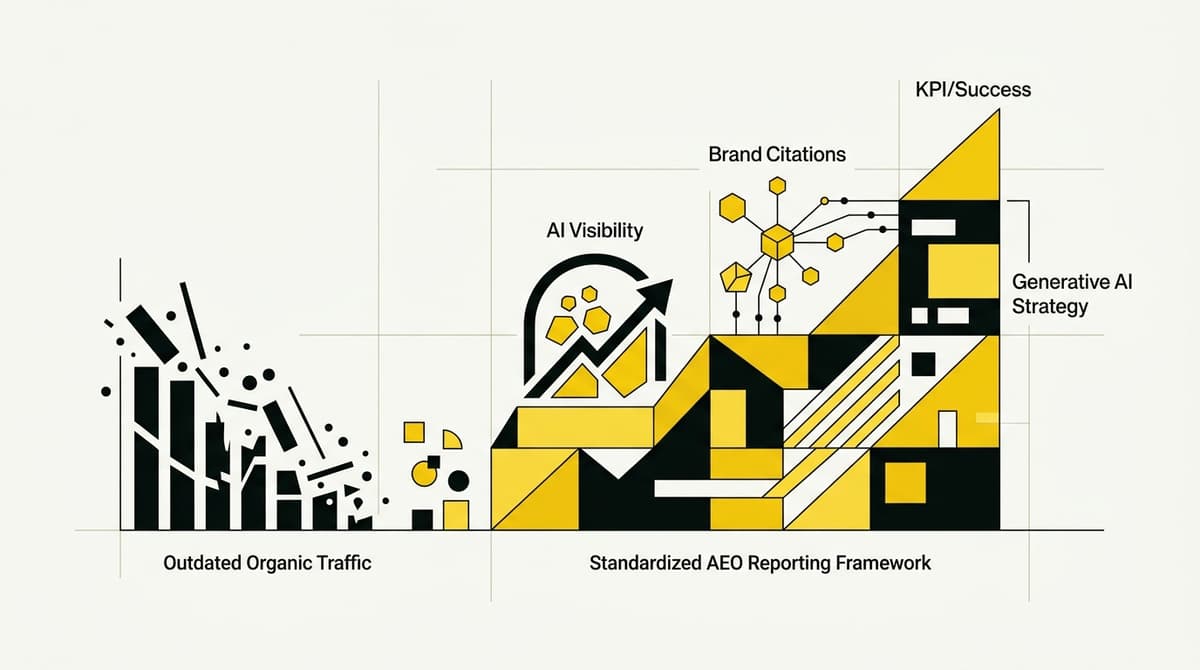
AEO ROI for B2B marketing is measured by tracking the frequency of brand citations in AI-generated answers and correlating them with reduced sales friction. Unlike traditional clicks, value is derived from establishing familiarity and trust in the buyer's consideration phase before they contact sales.
How do you measure the ROI of AEO for B2B marketing?
ROI is measured by tracking brand visibility and pipeline in generative search by monitoring brand mentions across LLMs and observing the resulting increase in perceived value and trust. Because AI attribution is probabilistic, success is seen when buyers enter the sales cycle with established familiarity, requiring less convincing and creating more room for margin.
- AI Citation Tracking: Regularly sampling AI systems to run an AI search visibility audit to see which brands are mentioned for specific problem categories.
- Demand Path Analysis: Monitoring the transition from asking AI about a problem to contacting sales.
- Sales Friction Reduction: Tracking the decrease in time spent explaining basic value propositions to leads.
- Brand Association: Measuring if AI systems recommend your company as a preferred solution in vendor shortlists.
Why is AEO more effective than traditional SEO for B2B?
AEO focuses on providing a single canonical answer that AI systems can extract and attribute, whereas SEO targets a list of links. This allows a brand to be preferred by AI assistants during the investigation and comparison phases, making the company a known entity before the first human interaction.
| Criteria | AEOmachine | Traditional SEO Methods |
|---|---|---|
| Primary Goal | Becoming the cited AI answer | Ranking high in link lists |
| Buyer Impact | Establishes trust and familiarity | Increases website traffic/clicks |
| Content Structure | Canonical answer pages per question | Keyword-optimized landing pages |
How does AEO impact the B2B buyer journey?
AEO ensures your company is mentioned when buyers ask AI about what works and who to consider. By owning the answer across the problem, investigation, and comparison stages, a brand becomes part of the intelligence the buyer uses to form an opinion long before contacting sales.
- Problem Phase: AI mentions your brand when a user searches for a specific technical problem.
- Investigation Phase: Your structured technical data (specifications, certifications) is cited as a factual source.
- Comparison Phase: Your brand appears in AI-generated vendor shortlists based on consistent patterns in training data.
- Decision Phase: The lead contacts sales as a familiar entity, not a stranger.
What technical elements drive AI citations?
AI systems favor content that is structured, consistent, and easy to parse. Using machine-readable formats and clear, factual layouts allows AI engines to synthesize a response from your site as a trustworthy source.
- Structured Data: Implementing FAQ, product, and organization schema.org markup.
- Canonical Answer Pages: Creating one dedicated page per target question to avoid internal competition.
- LLMS.txt: Using a site root file to curate content specifically for language models.
- Hub and Spoke Interlinking: Building topical authority through a steady stream of interlinked answers.
Want this applied to your company? Talk to us.
What does AI understand about your company?
See who it finds, who it trusts and where you appear.
See your marketFrequently Asked Questions
How do you measure the ROI of AEO for B2B marketing?
ROI is measured by tracking AI citation frequency for key problem-category queries and correlating those mentions with a decrease in sales friction and increased brand familiarity before first contact.
What is the difference between AEO and GEO?
Generative Engine Optimization (GEO) and Answer Engine Optimization (AEO) are closely related practices that both aim for AI-generated answers rather than traditional ranked links.
Does AEO replace traditional SEO?
No, they are complementary. AEO-optimized pages still depend on being crawlable and indexable, which are core pillars of traditional SEO.
How do AI assistants choose which vendors to recommend?
Recommendations emerge from patterns in training data and live sources retrieved at answer time, favoring brands mentioned consistently across independent sources.
Why is structured data important for AI visibility?
Structured data describes page content in a machine-readable format, helping AI systems associate a page with specific questions and entities for easier citation.