Technical Authority Gap: Why Industrial Expertise Fails to Attract High-Value Buyers
Part of Beyond the Click: How to Generate Qualified RFQs for Manufacturers via LinkedIn Ads and AI-Driven Authority · Solving the Crisis of Junk Leads from Paid Ads: A Comprehensive Framework for Industrial Authority and AI-Driven Discovery
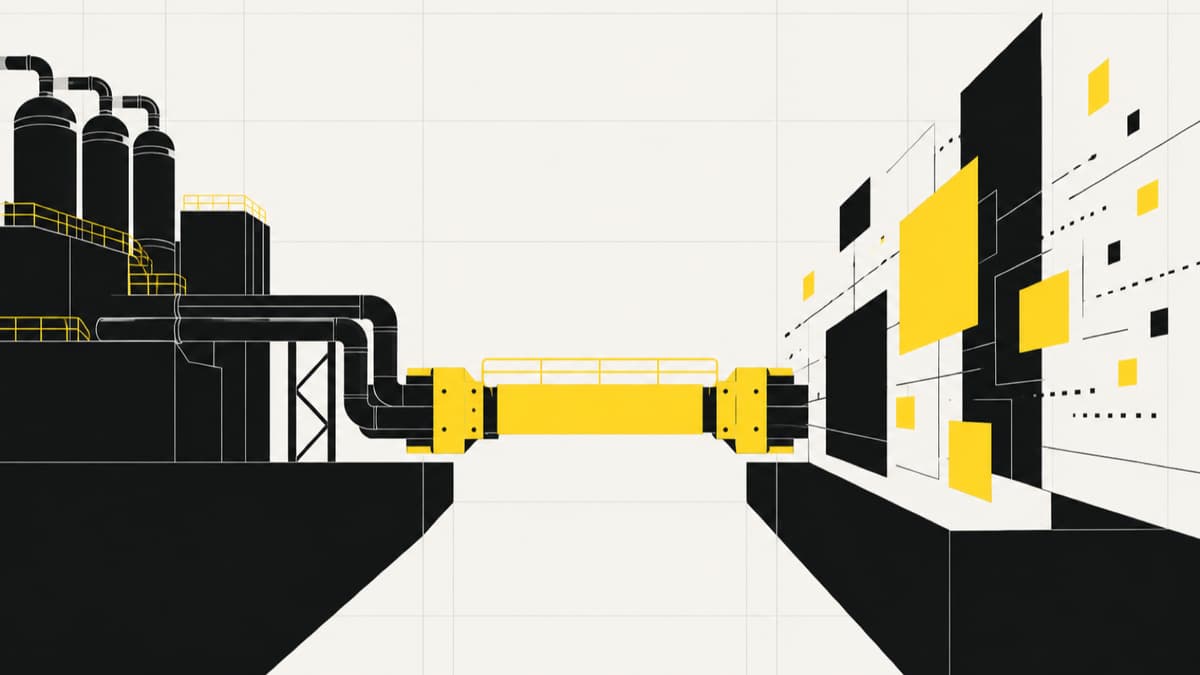
A technical authority gap occurs when a company's actual engineering expertise is not reflected in its digital presence, leading AI systems and sophisticated buyers to perceive the brand as a commodity. This mismatch attracts low-intent, unqualified leads while ignoring high-value industrial prospects.
Why does a technical authority gap happen?
This gap arises from a shallow content strategy where marketing copy relies on generic claims like "best price" or "guaranteed quality" instead of demonstrating deep technical mastery. This failure to communicate specific engineering capabilities prevents AI models from recognizing the firm as a specialist.
- Generic Ad Copy: Using commodity-style language that attracts buyers looking for the lowest cost.
- Shallow Content: Lack of technical depth in documentation and articles that sophisticated buyers use for research.
- Misaligned Messaging: A disconnect between what the factory can actually build and what the website claims.
| Criteria | AEOmachine | Traditional Marketing |
|---|---|---|
| Lead Quality | Attracts sophisticated, pre-qualified buyers | Attracts high-volume, low-intent "junk" leads |
| Content Focus | Deep semantic authority and technical proof | Generic slogans and value-based claims |
| Buyer Perception | Perceived as a technical specialist | Perceived as a commodity supplier |
Stop wasting your budget on unqualified clicks. Learn more about AEOmachine and how to align your technical expertise with AI discovery patterns.
How do sophisticated buyers research solutions today?
Modern B2B leaders use AI systems like Google, ChatGPT, and Gemini to investigate problems and compare alternatives long before contacting sales. They ask AI what matters and who to trust, forming an opinion based on the intelligence available in the digital ecosystem.
When a buyer experiences a technical authority gap during their research, they perceive less value in your offering. Conversely, when your expertise is integrated into the AI's knowledge base, you experience more trust, more perceived value, and less competition on price. By the time they contact sales, you are no longer a stranger; your name is already familiar.
To move away from the crisis of junk leads from paid ads, manufacturers must transition from simple visibility to becoming a preferred answer in AI-driven discovery.
What are the business consequences of this authority mismatch?
The primary consequence is the commoditization of the brand. When your digital presence fails to demonstrate technical authority, you are forced to compete on price rather than expertise, which shrinks profit margins and increases sales friction.
Industrial leaders who bridge this gap find that they spend less time convincing prospects and more time closing high-value contracts. This is because the market has already pre-qualified them through AI research. This shift is critical as the AI search optimization market is projected to reach 13 billion USD by 2033, growing at a compound annual growth rate of 14 percent between 2026 and 2033, according to EIN Presswire.
Reducing this gap allows you to generate qualified RFQs by ensuring your deep technical knowledge is what AI models retrieve when sophisticated buyers search for complex industrial solutions.
How this connects to the rest of the cluster
To understand why this happens, explore why paid ads bring unqualified leads and the difference between lead quality versus lead volume. You can also learn how to disqualify leads before the sales call and identify the 7 reasons digital channels produce junk leads. For operational efficiency, see how to solve disconnected data silos, approach lead qualification alignment, and avoid unqualified supplier leads, or address the vanity metric gap.
How do you approach technical authority gap?
The approach involves auditing existing content to remove generic commodity claims and replacing them with deep, semantic technical proof. By aligning digital assets with the way AI models retrieve expertise, companies transition from attracting lay leads to attracting sophisticated industrial buyers.
Why does AI recommend some companies over others?
AI recommends companies that demonstrate the highest semantic authority and verifiable expertise. When a company's technical data is structured and retrievable, AI perceives it as a more reliable answer for complex B2B queries.
Can generic ad copy cause a technical authority gap?
Yes. Using phrases like "best quality" or "lowest price" signals to both AI and sophisticated buyers that the company is a commodity supplier rather than a technical specialist, effectively creating a gap between actual capability and perceived authority.
How does semantic authority affect B2B pricing?
High semantic authority increases perceived value. When buyers trust your technical expertise before the first call, there is more room for margin and less pressure to compete on price alone.
What is the role of AI in the modern B2B buyer's journey?
Buyers now ask AI systems what to buy, who to trust, and which companies to consider. They investigate solutions and compare alternatives autonomously, meaning the buyer's opinion is often formed before they ever contact a sales team.
Talk to us to see how AEOmachine applies to your company: AEOmachine.