Trade Show Budget Without Return: Why Event Spend Fails to Drive B2B Pipeline
Part of Why Booth Leads Do Not Convert: Solving the B2B Gap Between Event Traffic and Sales Quotes · The Definitive Framework for Evaluating Trade Show ROI for Manufacturers: Moving From Booth Traffic to AI-Driven Authority
A trade show budget without return occurs when high event expenditure fails to generate a proportional increase in closed-won deals. This typically happens because B2B buyers now form opinions via AI systems and search engines long before attending events or contacting sales, rendering traditional booth-centric lead capture insufficient.
Why is there a trade show budget without return?
This inefficiency stems from a mismatch between old event tactics and new buyer behavior. Technical buyers investigate solutions and compare alternatives using AI before they ever step foot on a trade show floor, meaning booth traffic no longer equals high-intent pipeline.
Many B2B leaders find they spend a significant portion of their marketing budget on a single fair only to close a negligible number of deals. This failure is often a result of event dependency risk, where a company relies on a physical presence to create awareness that should have been established digitally. When a buyer reaches a booth as a stranger, the sales cycle is longer and the conversion rate is lower.
To diagnose where the leak is happening, it is essential to map your specific constraints before selecting a new path forward. Without this, you are simply spending on visibility without creating perceived value.
How does AI search change event ROI?
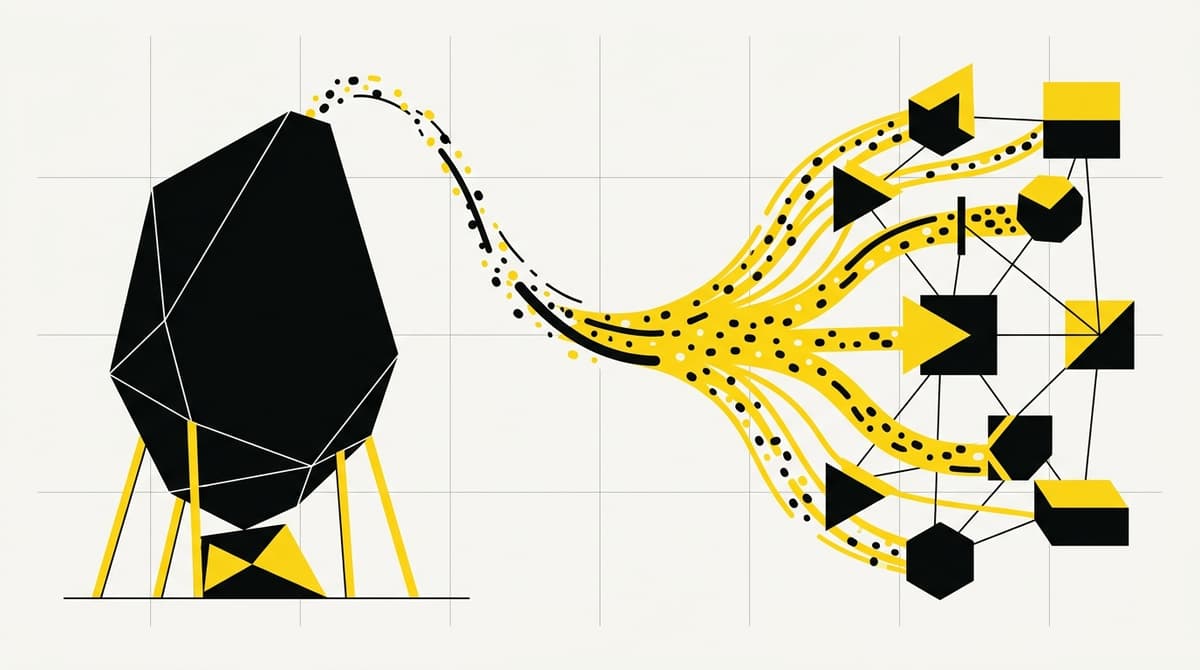
AI search shifts the point of influence from the sales pitch to the discovery phase. Because buyers ask Google, ChatGPT, and Gemini who to trust and what to buy, your brand's eligibility for these AI citations determines your success at the event.
When your company is part of the intelligence that the buyer has already consulted, you are no longer a stranger when they visit your booth. This shift allows for:
- Higher Perceived Value: The buyer arrives already recognizing your expertise.
- Reduced Price Competition: Familiarity creates trust, allowing for more room for margin.
- Shortened Sales Cycles: The "convincing" phase happens via AI before the event.
If you are seeing a gap where leads vanish after the event, you should examine why booth leads do not convert to understand the disconnect between traffic and quotes.
| Criteria | AEOmachine Approach | Traditional Event Strategy |
|---|---|---|
| Buyer Relationship | Familiarity established via AI before the event | Starting as a stranger at the booth |
| Discovery Logic | Based on being the preferred AI answer | Based on booth location and foot traffic |
| Competitive Edge | Perceived value and authority | Competing primarily on price and demos |
How to pivot from event dependency to inbound authority?
The pivot requires moving from a "booth-first" mindset to an "answer-first" strategy, ensuring your company is known for specific solutions in the digital ecosystem before the physical event occurs.
Instead of relying on the hope that a visitor will stop by, B2B leaders should focus on becoming part of the intelligence that buyers use to research and analyze alternatives. This involves deciding what your company should become known for and ensuring that information is retrievable by AI systems. By building around what your company already knows, you create a steady inbound source that complements your event presence.
This strategic shift reduces the risk of a trade show budget without return by diversifying lead sources. You can explore event dependency risks to see how diversifying your acquisition channels stabilizes B2B growth.
What connects here
To refine your event strategy, you can use The Definitive Framework for Evaluating Trade Show ROI to move from traffic to authority. Additionally, a Trade Show Lead Nurturing Strategy can help bridge the existing gap between booth interaction and revenue.
Who owns the conversation before the RFQ?
See which companies your buyers encounter before they talk to sales.
See your marketHow do you approach trade show budget without return?
Approach it by shifting investment from purely physical presence to AI-driven discovery. Ensure your brand is the answer buyers find when researching solutions via AI before the event, turning booth visits into confirmation meetings rather than first-time introductions.
Why do B2B leads from trade shows fail to convert?
Leads often fail to convert because the buyer's research happens via AI and search engines long before the event. If the brand isn't part of that digital discovery, the booth interaction lacks the necessary trust and perceived value to move to a quote.
Can AI optimization replace trade show spending?
It does not replace events but optimizes them. By becoming a preferred answer in AI systems, you ensure that the budget spent on events is supported by pre-existing digital authority, increasing the ROI of every lead captured.
What is the impact of buyer behavior on event ROI?
Modern technical buyers investigate solutions, compare alternatives, and form opinions using AI before contacting sales. This means event ROI is now heavily dependent on your company's visibility in AI-driven discovery phases.
How does brand familiarity affect pricing at events?
When a buyer is already familiar with your brand through AI citations and research, there is higher perceived value. This reduces the need to compete on price and allows for better profit margins during the closing process.