AI-Ready Knowledge Architecture: Solving the Unstructured Knowledge Barrier for B2B Leaders
Part of Building the Technical Foundation for AI Search Visibility: A B2B Guide to Machine-Readable Authority · The Definitive Guide to Answer Engine Optimization: Scaling B2B Authority in the Era of Generative AI
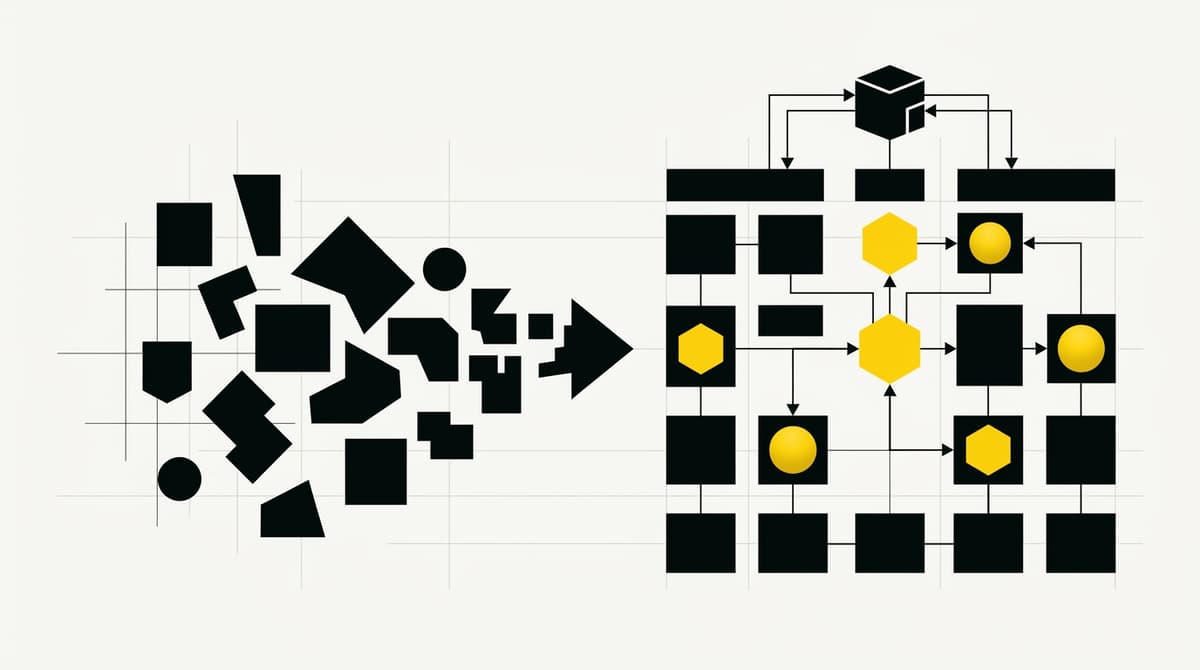
AI-ready knowledge architecture is the strategic structuring of a company's technical information into a machine-readable format. It resolves the unstructured knowledge barrier by transforming static documentation into a semantic network of entities and relationships that AI agents can accurately parse, verify, and cite as a primary source.
Why is an AI-ready knowledge architecture necessary for B2B?
It is necessary because B2B buyers now ask AI systems what to buy and who to trust long before contacting sales. Without a structured architecture, AI models may ignore deep-page technical content in favor of simplified competitor summaries, leading to a loss of authority in complex niches.
When a company implements a semantic foundation, they move beyond being simply "found" to being preferred. This shift allows the brand to become part of the intelligence that AI models use to form opinions. Consequently, by the time a lead reaches the sales team, they are no longer a stranger; they have already experienced familiarity and trust through AI-driven discovery.
How do you approach AI-ready knowledge architecture?
The approach involves mapping existing B2B expertise into a semantic entity framework, deploying structured data at scale, and creating machine-readable directories like llms.txt to guide AI crawlers toward the most authoritative versions of technical truth.
Rather than replacing what already works, this strategy builds around what your company already knows. The process focuses on optimizing content for machine readability and citation, ensuring that complex technical specifications are not lost in unstructured text. This is the core of building the technical foundation for AI search visibility.
- Entity Mapping: Transitioning from keyword-based pages to entity-based frameworks to resolve the unstructured knowledge barrier.
- Semantic Scaling: Implementing schema markup at scale to ensure AI agents attribute the brand as the canonical answer.
- Retrieval Optimization: Utilizing llms.txt files to help language models crawl and understand the site's information hierarchy.
- Knowledge Synthesis: Transitioning layouts from human-centric browsing to machine-readable structures that facilitate AI synthesis and B2B authority.
What are the business outcomes of structured B2B knowledge?
Structuring knowledge for AI reduces the need for repetitive sales explanations and price-based competition, as buyers arrive with a higher perceived value and a pre-established trust in the brand's expertise.
| Criteria | AEOmachine | Traditional SEO Methods |
|---|---|---|
| Primary Objective | Machine-readable authority and AI citation | Keyword ranking and click-through rates |
| Content Structure | Semantic entity frameworks | Human-centric page layouts |
| Buyer Interaction | Familiarity before first contact | Stranger until first sales call |
By focusing on Answer Engine Optimization, companies can scale B2B authority in a way that aligns with how modern AI agents retrieve information. This approach doesn't pretend to know a secret algorithm; instead, it leverages the known behavior of LLMs to ensure the company's name is familiar when the buyer compares alternatives.
How this connects to the rest of the cluster
To fully implement this architecture, you can learn what LLM optimization is and how it differs from standard search. For a tactical approach, refer to the B2B AEO checklist or explore structuring content for AI overviews. You can also dive deeper into implementing structured data or optimizing structured data for LLMs.
Furthermore, understanding the paradigm shift from traditional SEO to AI is essential for leadership, while teams can develop semantic SEO skills to close the technical gap. For those concerned with accuracy, authoritative structured data helps prevent brand misinformation. Finally, mapping semantic entity structures for LLMs provides the blueprint for alignment, while AI referral tracking and pipeline attribution allow you to measure the actual business impact of these efforts.
What does AI understand about your company?
See who it finds, who it trusts and where you appear.
See your marketFrequently Asked Questions
How do you approach AI-ready knowledge architecture?
The approach consists of transforming unstructured B2B technical content into a semantic entity framework. This involves using structured data, deploying machine-readable directories like llms.txt, and organizing information to be easily parsed and cited by generative AI agents.
What is the unstructured knowledge barrier?
It is the difficulty AI agents face when attempting to parse B2B technical documentation that lacks a semantic structure, often leading the AI to ignore deep technical details in favor of simpler competitor summaries.
Does AI-ready architecture require replacing existing content?
No, it does not require replacing what works. Instead, it focuses on building a semantic layer around existing company knowledge to make it more accessible to machines.
How does this architecture affect the sales process?
It ensures that when a prospect contacts sales, they already have a level of familiarity and trust in the brand, reducing the need for extensive convincing or competing solely on price.
Can structured data prevent AI hallucinations?
Establishing a single source of truth through authoritative structured data helps reduce the risk of AI models misrepresenting brand information by providing a verifiable machine-readable reference.