Semantic Entity Structure for LLMs: Aligning B2B Knowledge for AI Retrieval
Part of Building the Technical Foundation for AI Search Visibility: A B2B Guide to Machine-Readable Authority · The Definitive Guide to Answer Engine Optimization: Scaling B2B Authority in the Era of Generative AI

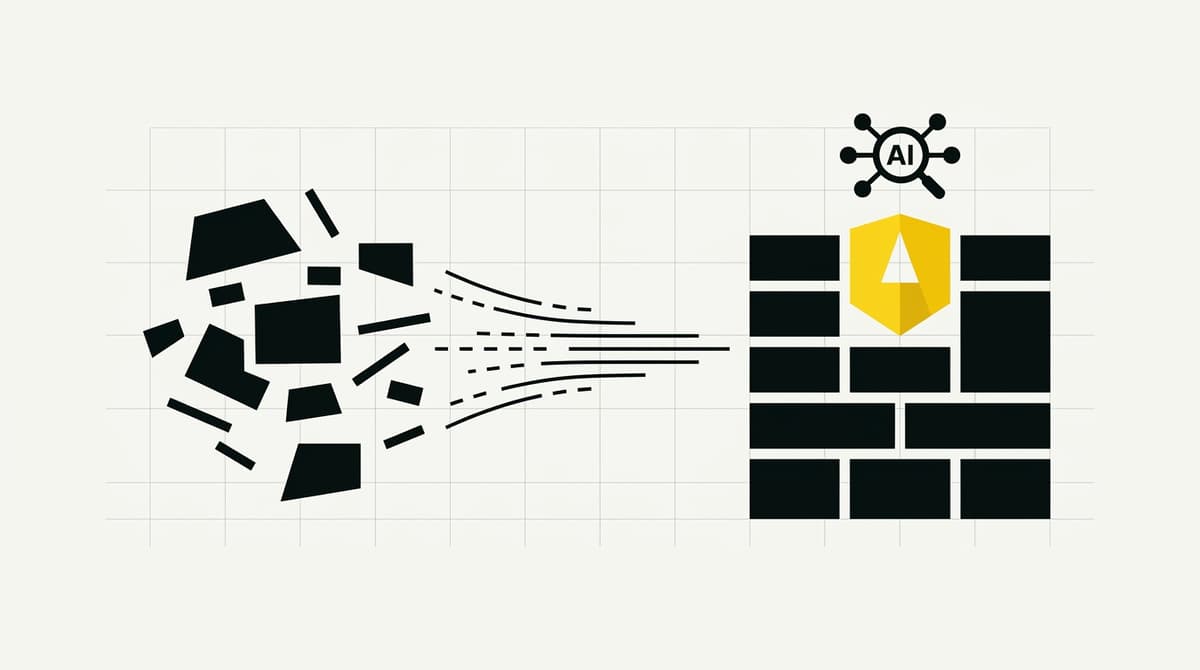
A semantic entity structure for LLMs is a method of organizing B2B knowledge into defined entities and relationships that AI crawlers can ingest. By moving away from unstructured text, companies reduce the risk of being skipped by generative AI in favor of competitors who provide machine-readable data.
Why is unstructured content for llm crawlers a problem?
Unstructured content is difficult for AI systems to parse accurately, often leading to retrieval gaps where complex B2B expertise is ignored. When content is written only for human readability, AI crawlers may struggle to extract specific facts, reducing the likelihood that the brand is cited in AI-generated answers.
- Information Density: LLMs may skip long-form, "fluffy" content that buries the answer.
- Contextual Gaps: Without a clear structure, AI cannot easily verify the relationship between a company and its expertise.
- Competitive Risk: B2B buyers now ask AI systems what to buy and who to trust, meaning exclusion from these responses is a significant business risk.
Ready to move beyond unstructured content? Learn more about AEOmachine and how to make your B2B knowledge machine-readable.
How does semantic entity structure for LLMs change the buyer journey?
Implementing a semantic structure ensures your brand becomes part of the intelligence that B2B leaders use to research and compare alternatives. This allows your company to be recognized by AI long before a lead ever contacts your sales team.
| Criteria | AEOmachine | Traditional SEO Methods |
|---|---|---|
| Content Focus | Machine-readable entities | Keyword density & backlinks |
| Buyer Interaction | Cited by AI during research | Found via search result links |
| Sales Relationship | Lead arrives with familiarity | Lead arrives as a stranger |
When B2B leaders use ChatGPT, Gemini, or Google to investigate solutions, a structured approach helps you be the preferred option. This results in more perceived value and less competing on price because the buyer has already formed a positive opinion based on AI-verified data.
What are the business outcomes of optimizing for AI retrieval?
Optimizing for AI retrieval transforms your digital presence into a source of truth that LLMs can reliably attribute. This shift reduces the need for extensive explaining during the sales process because the AI has already validated your expertise.
- Increased Trust: Buyers experience more trust when an AI system recommends your brand.
- Higher Margins: Familiarity with your brand's authority creates more room for margin.
- Faster Sales Cycles: Because the buyer has already investigated the solution via AI, the sales conversation is more efficient.
To achieve this, leaders must build the technical foundation for AI search visibility, ensuring that the company's knowledge is not just available, but accessible to AI agents.
How this connects to the rest of the cluster
To fully master this shift, explore The Definitive Guide to Answer Engine Optimization for a complete B2B authority framework.
You can learn more about what LLM optimization is to align your knowledge base with AI expectations.
Use a B2B AEO Checklist to verify your content is structured for generative AI.
Discover how to structure B2B content for AI Overviews to increase citation probability.
Explore implementing structured data for AI search to capture buyer intent.
Learn what llms.txt is and how it helps AI crawlers understand your site.
Find out how to implement schema markup at scale to avoid engineering bottlenecks.
Read about optimizing content structure for AI synthesis to drive B2B authority.
Learn how to track AI referral traffic when conversions appear as direct traffic.
Study optimizing structured data for LLMs to secure B2B recommendations.
Explore authoritative structured data to help prevent brand misinformation.
Analyze the paradigm shift from traditional SEO to AI optimization for B2B leaders.
Develop semantic SEO skills for the AI era to close the writer's semantic gap.
Understand how to attribute pipeline to AI search in the generative era.
What does AI understand about your company?
See who it finds, who it trusts and where you appear.
See your marketFrequently Asked Questions
How do you approach semantic entity structure for LLMs?
The approach involves transforming unstructured content into machine-readable formats that define clear entities and their relationships. This ensures AI crawlers can easily ingest, verify, and attribute B2B expertise when generating answers for users.
Do I need to change all my existing content for AI?
No, you do not need to change everything. The goal is to build around what your company already knows and reformat key knowledge repositories to be more accessible to AI crawlers.
How does AI decide which B2B company to recommend?
While nobody knows the exact secret algorithm, AI models generally favor sources that provide clear, verifiable, and structured information that matches the user's intent.
Will AI optimization replace traditional SEO?
AI optimization is not here to replace what works, but to evolve it. It moves the focus from simply being found in a list of links to being the preferred answer provided by the AI.
How does this impact the sales process?
It changes the relationship status when a lead contacts sales. Because the buyer has used AI to research and compare, you are no longer a stranger, leading to higher perceived value.
Talk to us to see how AEOmachine applies to your company: AEOmachine.