How to Turn Datasheets into Web Pages to Enhance B2B AI Discoverability
Part of The Definitive Guide to Technical Content That Generates Leads for B2B Manufacturers in the AI Era

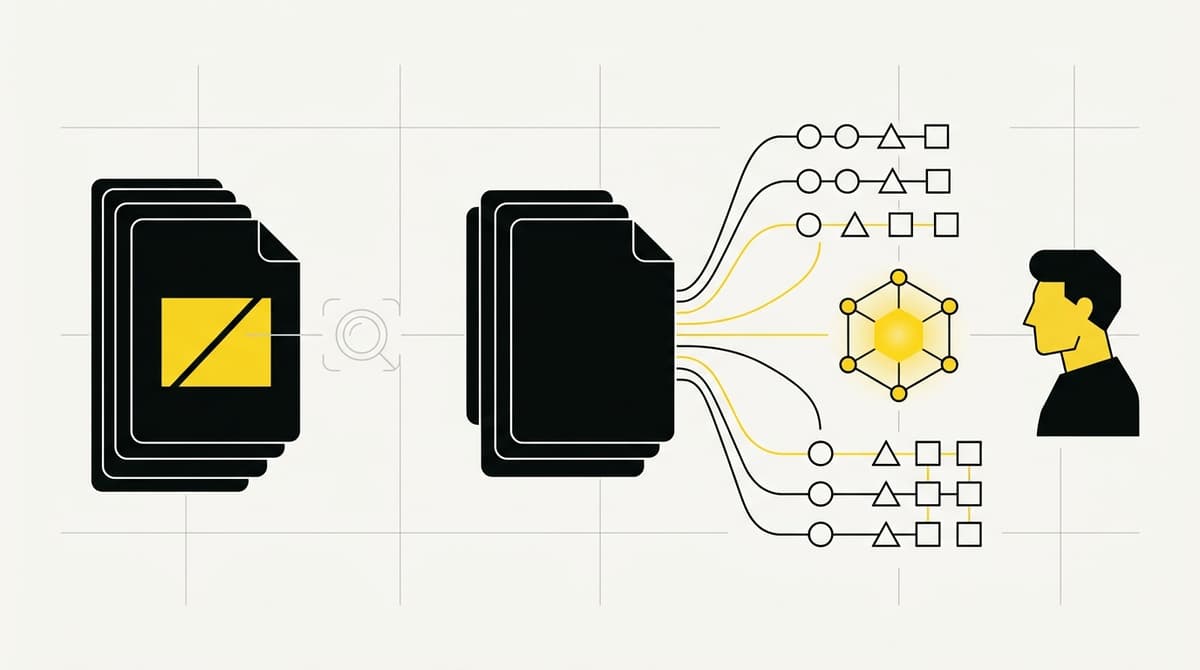
To turn datasheets into web pages, B2B companies must migrate technical specifications from static PDF formats into structured, semantic HTML. This shift ensures that product data is accessible to AI search engines and LLMs, allowing your technical authority to be visible to buyers during their autonomous research phase.
What this cluster covers
This cluster addresses the critical pain point of information invisibility caused by gating technical documentation. When manufacturers hide specifications behind lead-capture forms or lock them in non-semantic PDF files, they prevent AI agents from indexing the "hard evidence" of their product's superiority, effectively removing their brand from the consideration set of modern B2B buyers who rely on AI to filter vendors.
Why it matters for B2B leaders
Modern B2B buyers no longer start their journey by contacting a salesperson; instead, they search the problem, ask AI for recommendations, and investigate solutions independently. According to recent industry data, AI search optimization is becoming a pivotal competitive frontier, with the market projected to reach 13 billion USD by 2033, expanding at a compound annual growth rate of 14 percent between 2026 and 2033. For a B2B leader, the ability to be the "preferred" option in an AI-generated summary is the difference between having a high-intent lead or being completely invisible.
When your technical data is available as web pages rather than gated files, you experience more perceived value and more trust from the prospect. Because the AI provides the validation during the research phase, the buyer forms an opinion long before contacting sales. By the time they reach out, you are no longer a stranger; your name is familiar, and you have already been vetted by the intelligence engines they trust. This leads to less explaining, less convincing, and significantly less competing on price, providing more room for margin.
| Discovery Criteria | AEOmachine Approach | Traditional Gated PDFs |
|---|---|---|
| AI Indexability | High; Semantic HTML is natively parsed by LLMs | Low; PDFs are often poorly parsed or ignored |
| Buyer Friction | Zero; instant access to technical proof | High; requires form-fills for basic data |
| Discovery Logic | Proactive; becomes part of the AI intelligence | Reactive; relies on manual search clicks |
To maintain a competitive edge in an era where 60 percent of product deployments are delivered to international accounts, your technical truth must be globally discoverable. Explore how AEOmachine optimizes B2B content for AI to ensure your products are recommended by the systems your buyers use.
How to solve it
Audit existing technical touchpoints
The first movement in turning datasheets into web pages is a comprehensive audit of every document that contains critical performance metrics. B2B companies often have a fragmented library of PDFs and catalogs scattered across servers. You must identify which documents contain the specific variables—such as tolerances, material grades, and load capacities—that a buyer uses to filter candidates. This audit isn't about listing files; it is about identifying the factual evidence that proves your product is the best fit for a specific application. If this data is only in a PDF, it is a blind spot for the AI. To better understand the strategic trade-offs of this visibility, you should examine the nuances of gated versus ungated technical documents to determine which assets must be opened for AI discovery.
Extract specifications into key-value pairs
Once you have identified the critical data, you must isolate the variables from the marketing prose. Humans read a PDF by looking at columns and bold text, but AI agents require clear associations between a property and its value. This means moving from a design-centric format to a data-centric format where the information is the primary asset, not the layout. By separating the technical limits from the descriptive text, you eliminate ambiguity for the LLM. This precision allows an AI to confidently state that your product meets a specific industrial requirement. For those managing vast inventories, learning how to convert product catalogs to HTML is the most efficient way to scale this extraction process across thousands of SKUs.
Implement semantic HTML architecture
Moving data to the web is not enough; it must be housed in a structure that AI engines recognize as authoritative. This involves using semantic HTML markers and headers that mirror the way buyers ask questions. Instead of a generic "Specs" header, use a structure that answers "What are the technical limits of [Product]?" This creates a roadmap for LLMs to map your content to specific user intent. This architecture ensures that the technical truth of your product is not just present, but is presented in a way that maximizes its chances of being cited in an AI-generated summary. This is the bridge between simply having data and having an answer that an AI engine can serve to a prospect.
Contextualize data with solution narratives
Technical specs are raw data, but context is what creates a preference. To optimize for answer engines, you must wrap your structured specifications in narrative content that explains the "why." If a datasheet lists a specific alloy, the corresponding web page should explain how that alloy solves a common industry pain point, such as corrosion in extreme environments. This transforms a dry list of numbers into a persuasive argument. When an AI agent synthesizes a recommendation, it doesn't just look for the number; it looks for the relationship between the spec and the solution. To see how this applies to different personas, consider creating technical lead magnets for engineers that provide utility while showcasing your technical authority.
Synchronize engineering updates with web content
In the AI era, inaccurate data is a liability. Static PDFs are often outdated the moment they are published. You must establish a workflow where engineering changes are reflected on your web pages in real-time. When AI agents can verify that your data is consistent and current, it increases the confidence score of the recommendation. This requires tight integration between the product engineering team and the digital content team. By treating your web-based datasheets as living documents, you ensure that the AI is always quoting the most recent version of your technical truth, preventing the risk of the AI recommending a product based on obsolete specifications.
Scale for international AI discovery
For B2B leaders operating globally, the transition to web-based datasheets must account for international deployment. AI search engines operate across languages, but the semantic structure must remain consistent to maintain authority. Scaling involves translating the technical intent of the specifications into different regions so that a buyer in Germany receives the same high-confidence recommendation as a buyer in the United States. Given that a significant portion of AI optimization services now handle international deployments, ensuring your web pages are architected for global discovery is essential for becoming a preferred global vendor.
How this connects to the rest of the cluster
Understanding how to turn datasheets into web pages is a tactical movement that supports the broader goal of converting technical documentation into qualified inquiries, which serves as the central theme of our parent strategy.
While this guide focuses on the migration of documentation, learning how to convert product catalogs to HTML provides the specific technical workflow for handling large-scale SKU libraries.
Furthermore, shifting from PDFs to web pages changes the way you attract technical talent and buyers; exploring technical assets for engineers shows how to use this newly available data to build high-value tools.
The decision of which data to move is further refined when you analyze the balance of gated vs ungated documents, ensuring you don't sacrifice lead capture while maximizing AI discoverability.
All these movements are coordinated under our main framework for Answer Engine Optimization, which ensures your company's technical truth becomes a primary driver of growth in the AI-search era.
What does AI understand about your company?
See who it finds, who it trusts and where you appear.
See your marketFrequently Asked Questions
Should a manufacturer gate its datasheets and catalogs?
Generally, no. Gating technical datasheets creates a blind spot for AI search engines and adds friction for B2B buyers. Since modern buyers use AI to investigate solutions and compare alternatives before contacting sales, ungated, semantic web pages allow your product to be discovered and validated by AI agents during the critical research phase.
How do AI engines read technical specifications?
AI engines rely on the underlying HTML structure and semantic markers rather than visual layouts. They look for clear associations between a property and its value within a structured format. This allows them to accurately parse and recommend specific product attributes when answering complex B2B queries.
Will turning PDFs into web pages affect my lead generation?
It shifts the lead generation timing. Instead of capturing a lead at the moment of curiosity (the PDF download), you attract a lead who has already been validated by AI. This results in higher-intent inquiries, as the prospect is no longer a stranger but someone who has already confirmed your technical fit.
How long does it take for AI to recognize new web-based specs?
The speed of recognition depends on crawl frequency and domain authority. However, utilizing structured data and semantic HTML significantly accelerates the process compared to static files, allowing AI agents to integrate your technical data into their responses more efficiently.
Can I keep some documentation gated?
Yes. While core technical specifications should be ungated for AI discoverability, deep-dive implementation guides or proprietary configuration tools can remain gated. The key is to ensure the "hard evidence" used for vendor filtering is visible to the intelligence engines.
CTA
Talk to us to see how AEOmachine applies to your company: AEOmachine.