AI Ranking Algorithm Black Box: Why Your B2B Expertise Isn't Being Cited
Part of Building the Technical Foundation for AI Search Visibility: A B2B Guide to Machine-Readable Authority · The Definitive Guide to Answer Engine Optimization: Scaling B2B Authority in the Era of Generative AI
The AI ranking algorithm black box refers to the opaque, non-linear process LLMs and generative search engines use to retrieve and cite sources. Unlike traditional SEO, these systems rely on semantic relationships and probabilistic weights rather than a public set of fixed ranking factors, making citations unpredictable.
Why is the AI ranking algorithm black box a problem for B2B?
The black box creates a citation gap where high-quality B2B content exists but is never cited by AI, leading to lower referral traffic from high-intent users who form opinions before contacting sales.
For B2B leaders, this opacity means that simply producing "great content" is no longer enough. Because nobody knows exactly how an AI chooses what to recommend, companies face a risk where their expertise remains invisible to the systems that B2B buyers now use to investigate solutions and compare alternatives.
How do you approach the AI ranking algorithm black box?
The approach is to move from trying to "crack" the algorithm to increasing the probability of retrieval by structuring knowledge into machine-readable, semantic entities that AI can easily parse.
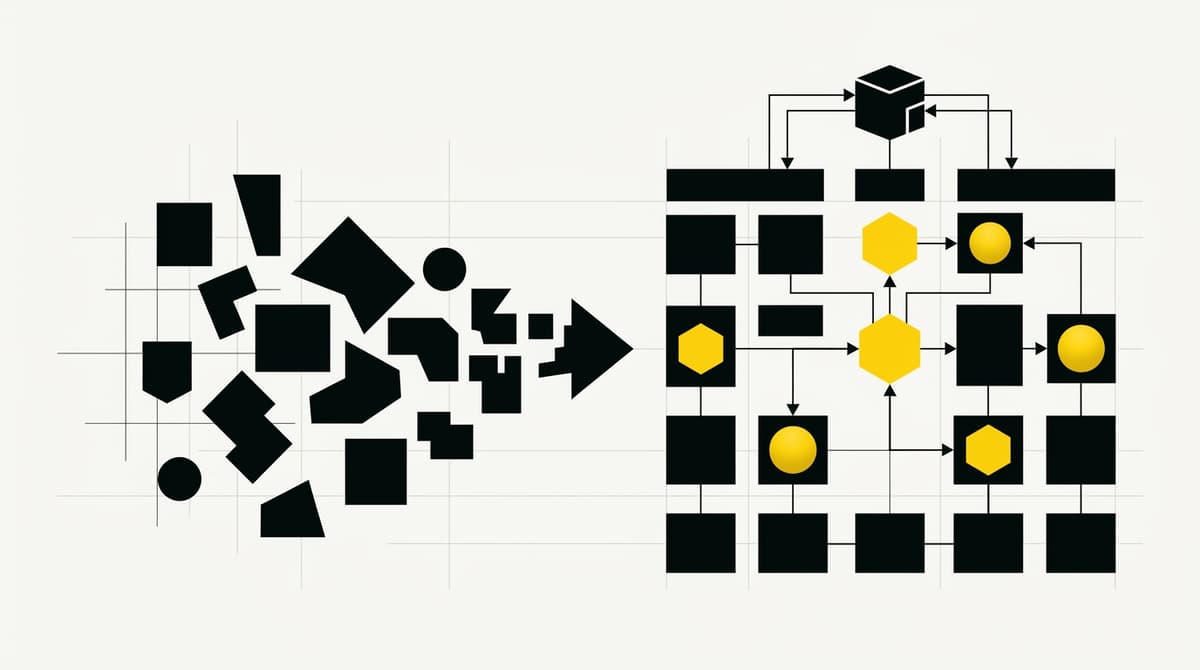
Rather than pretending to know the secret algorithm, the focus should be on building around what your company already knows. This involves shifting from human-centric layouts to a machine-readable structure for AI synthesis. When your data is structured correctly, you become part of the intelligence the AI uses to form an answer.
| Comparison Criteria | AEOmachine | Traditional SEO Methods |
|---|---|---|
| Goal | Probability of AI citation | Keyword ranking positions |
| Knowledge Format | Semantic entity structures | Keyword-optimized pages |
| Measurement | Retrieval and attribution | Click-through rate (CTR) |
How does the citation gap affect the B2B buyer journey?
The citation gap prevents your brand from being part of the early research phase, meaning buyers contact sales as strangers rather than as informed leads who already trust your expertise.
Modern B2B buyers ask AI what matters, what works, and who they should consider long before they reach out to a human. If the AI ranking algorithm black box excludes your brand from those citations, you experience less perceived value and are more likely to compete on price rather than authority. By implementing a technical foundation for AI search, you ensure your name is familiar when the buyer finally compares alternatives.
What is the best way to reduce the risk of being ignored by AI?
The most effective way is to align your B2B knowledge with the way LLMs retrieve information, using structured data to bridge the gap between unstructured text and semantic entities.
To improve the likelihood of being cited, B2B companies should focus on implementing structured data for AI search. This removes the friction that causes the "black box" to ignore high-quality content. By deciding what your company should become known for and mapping that expertise into a semantic entity structure, you move from being a hidden asset to a cited source.
How this connects to the rest of the cluster
To master the shift from links to answers, explore The Definitive Guide to Answer Engine Optimization. For those transitioning their strategy, The Paradigm Shift from Traditional SEO to AI Optimization provides the necessary framework.
Technical implementation is further detailed in guides on LLM Optimization and the use of llms.txt for crawler optimization. For scaling, check the B2B AEO Checklist and strategies for scaling schema markup.
To ensure content quality, refer to structuring content for AI Overviews and optimizing structured data for LLMs. For brand protection, use authoritative structured data to prevent misinformation.
Operational gaps can be solved by developing semantic SEO skills and establishing an AI-ready knowledge architecture. Finally, measure success using AI referral tracking methods and pipeline attribution for AI search.
What does AI understand about your company?
See who it finds, who it trusts and where you appear.
See your marketHow do you approach AI ranking algorithm black box?
The approach is to stop chasing the algorithm and start optimizing for retrieval probability. This is done by structuring B2B expertise into machine-readable semantic entities, making it easier for LLMs to identify, extract, and cite your content as a reliable source.
What is the citation gap in AI search?
The citation gap is the discrepancy between the quality of a company's content and its frequency of being cited in AI-generated answers, often caused by a lack of machine-readable structure.
Can you force an AI to cite your B2B brand?
No, retrieval and citation are probabilistic. However, you can increase the probability by improving the technical clarity and semantic alignment of your data for AI crawlers.
Why do AI engines ignore high-quality B2B content?
High-quality content is often written for humans in unstructured formats. The AI ranking algorithm black box may ignore it if the content lacks the semantic markers needed for the AI to verify its authority.
Does traditional SEO help with AI citations?
While some fundamentals overlap, traditional SEO focuses on keywords and links, whereas AI citation requires semantic authority and machine-readable structures to solve the retrieval problem.